

HIROSHI SUGIMOTO: EXTINCTION
HAPPENINGText: Alma Reyes
Also in this section are large, luminously colored panels from the “Opticks” series. For these chromogenic prints, Sugimoto used Polaroid exposures to record beams of light passing through a glass prism. Inspired by Newton’s own 1704 Opticks spectral dispersion experiment, the photographer was able to discover a multitude of color schemes trapped between the standard color bands. We visualize this spectacular result in “Opticks 087” (2018), where the blue color fields emerge through light to create an abstract painting.
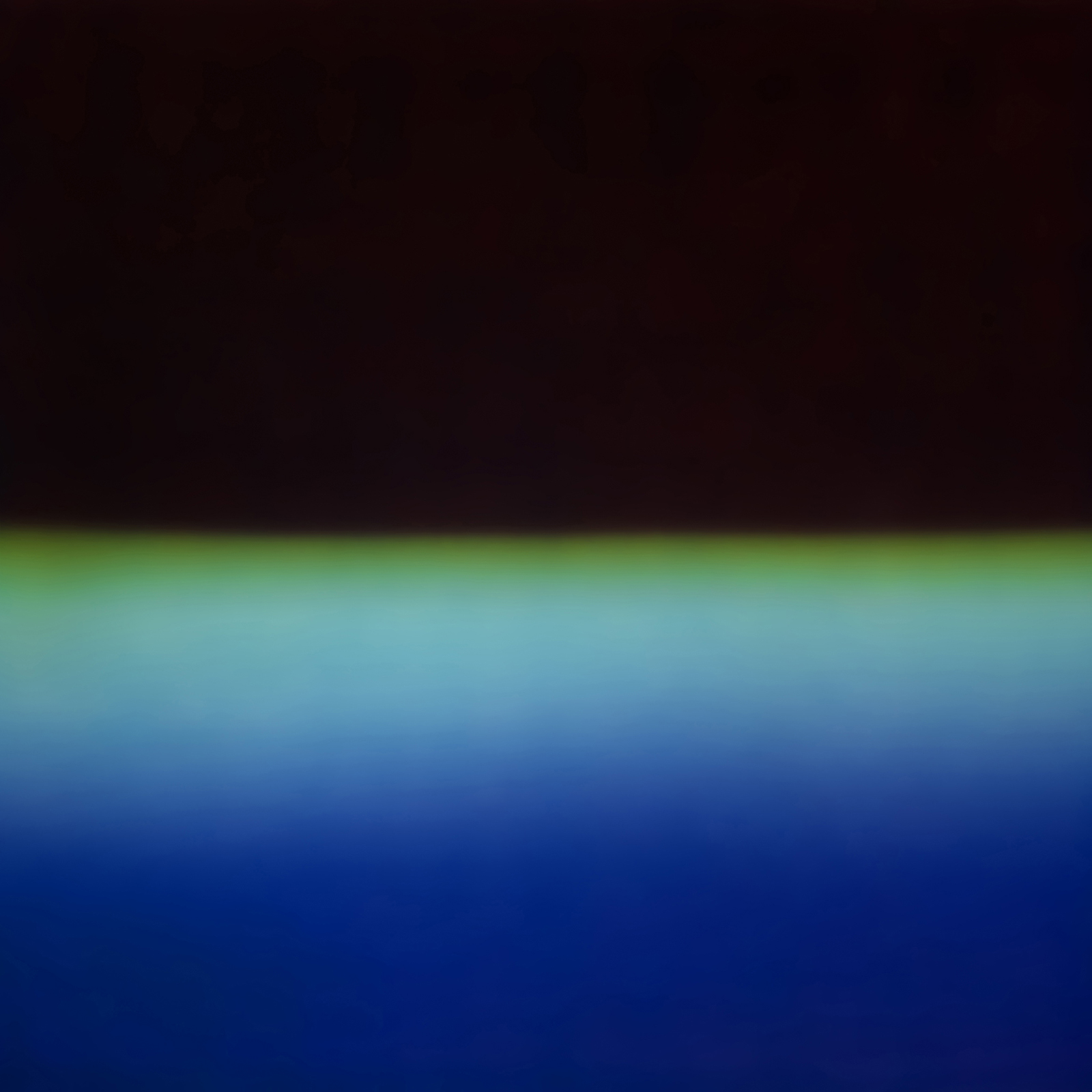
Hiroshi Sugimoto, Opticks 087, 2025 © Hiroshi Sugimoto/Courtesy of Gallery Koyanagi
Visitors will surely find the “Lighting Fields” series mesmerizing, as Sugimoto embeds the effects of electrical discharges directly onto photographic dry plates using a Van De Graaff 400,000-volt generator. This attempt arose from Benjamin Franklin and Michael Faraday’s innovative electricity research, alongside Talbot’s discovery of calotype photography negative-positive process. Each image, such as “Lightning Fields 163” (2009) projects meteor-like showers or lightning branches. For Sugimoto, the technique led to a more acute awareness of scientific pioneers in the darkroom — a magnificent blend of experimental photography and alchemy.
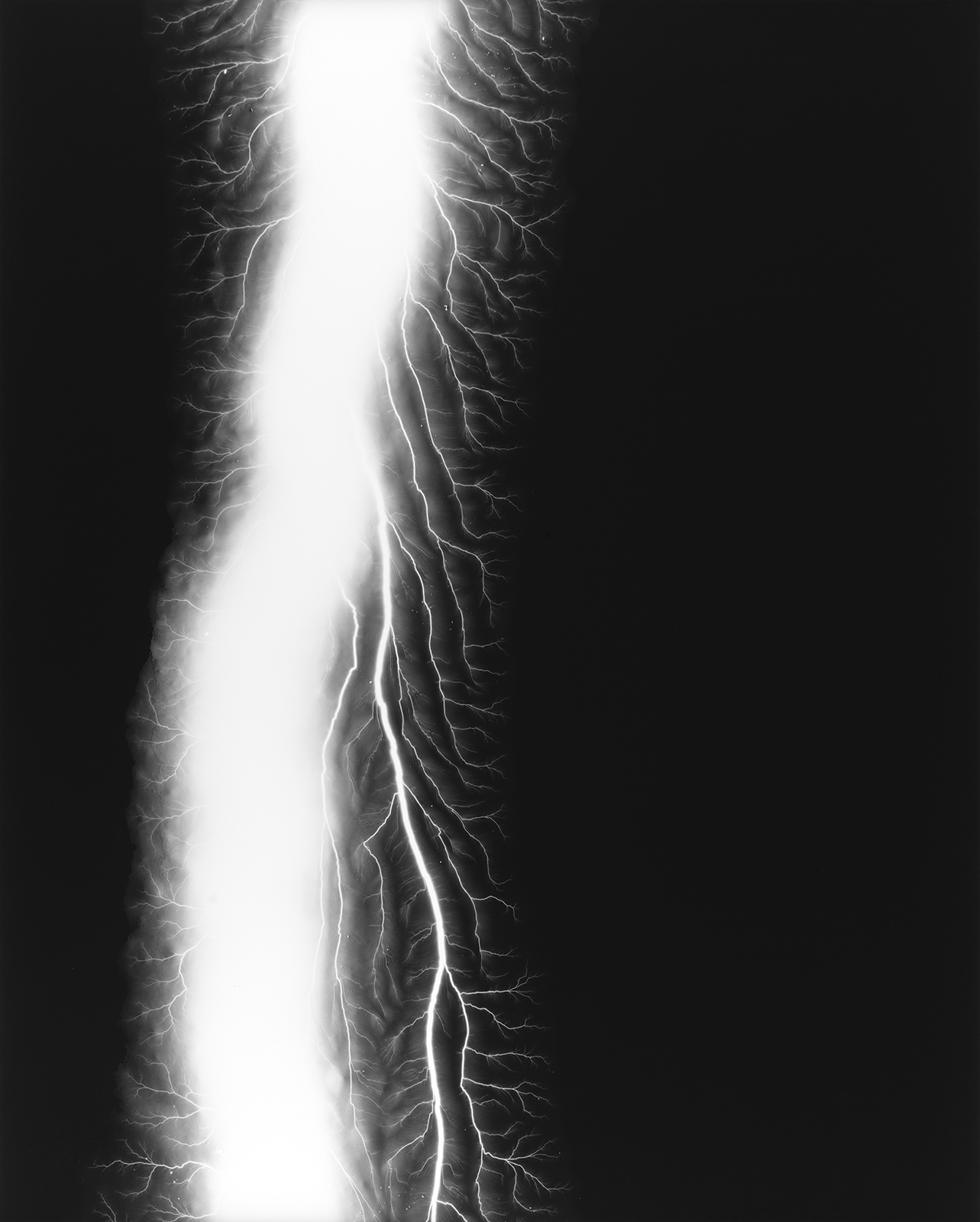
Hiroshi Sugimoto, Lightning Fields 163, 2009 © Hiroshi Sugimoto/Courtesy of Gallery Koyanagi
Take a moment to study the large “Portraits” shots encompassing Emperor Hirohito, Fidel Castro, Napoleon Bonaparte, and Princess Diana, among others. Sugimoto has translated royal portrait paintings into black-and-white photographic renditions that evoke a startling lifelike quality reminiscent of wax statues.
Finally, on the third floor, viewers can inspect the secrets of Sugimoto’s photographic processes through his personal notebooks. Starting in the mid-1970s, Sugimoto compiled sketches, diagrams, and mathematical calculations in these notebooks. A printing record illustrates tests he conducted to select the ideal photographic paper, detailing the procedures for equilibrating tonal values and applying darkroom techniques. Additionally, the MOMAT archive of his works from the “Seascapes” and “Theater” series provides supplementary impact to the overall exhibition.
Hiroshi Sugimoto: Extinction
Date: June 16th – September 13th, 2026
Opening Hours: 10:00 – 17:00 (Fridays and Saturdays till 20:00)
Closed on Mondays (except July 20th) and July 21st
Place: The National Museum of Modern Art, Tokyo
Address: 3-1 Kitanomaru Koen, Chiyoda-ku, Tokyo
Tel: 050-5541-8600 (Hello Dial)
https://art.nikkei.com/sugimoto/
Text: Alma Reyes