


ROPPONGI CROSSING 2025: WHAT PASSES IS TIME. WE ARE ETERNAL.
HAPPENINGText: Alma Reyes
Mori Art Museum has launched the eighth edition of its Roppongi Crossing exhibition. “Roppongi Crossing 2025: What Passes Is Time. We Are Eternal.” runs until March 29th and centers on the theme of “time.” Today, we live a complex life of constant speed, rapidly accelerating with high-powered digital technology. The overwhelming dissemination of information has clouded our horizon with snippets of war, violence, racial discrimination, economic disparity, and human rights issues that continue to haunt and dominate our daily routines. Amid current socio-political conflicts and the inevitable flurry of social media, we tend to disregard the most important essence of time’s existence. However, art encourages our minds and emotions to pause and re-evaluate our time for ourselves and others, as well as for nature and our surroundings. It becomes the catalyst that regenerates compassion and imperative dialogue with other people.
Twenty-one Japanese and foreign artists and artist groups active in Japan or overseas with Japanese roots present paintings, sculptures, videos, crafts, zines, and community projects. They explore various regional, cultural, and geopolitical backgrounds that influence human perception of time and space in the contemporary scene. The show outlines four perspectives that extrapolate the concept of time linked with the works.
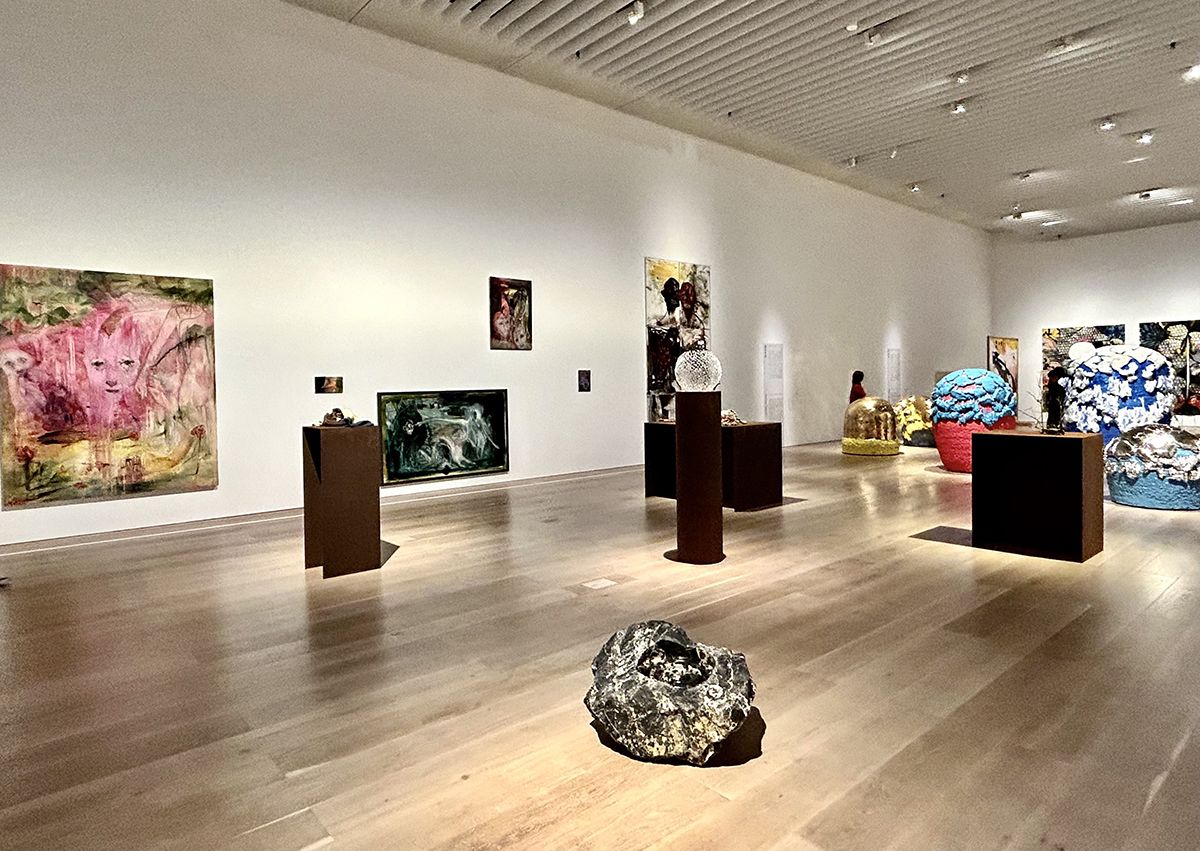
Gallery view: Roppongi Crossing 2025: What Passes Is Time. We Are Eternal., Mori Art Museum, Tokyo, 2025-2026, Photo: Alma Reyes
In the first gallery, “Scales of Time: Personal/Universal Time,” artists interpret personal experiences and memories through multifarious media — molding, casting, painting, stitching, and mark making — using a wide range of materials, like earth, textiles, bronze, glass, and paint. Ceramic artist Takuro Kuwata displays imperfect forms as shown by the large-scale “Untitled” (2016), that emphasize “kairagi” (glazed cracks developed during firing) and “ishihaze” (exposed minerals on the surface). Though inspired by traditional Japanese ceramics, he delivers a novel sense of beauty wrapped in rough clay textures, flowing glazes, and bright colors and patterns in modern tones.
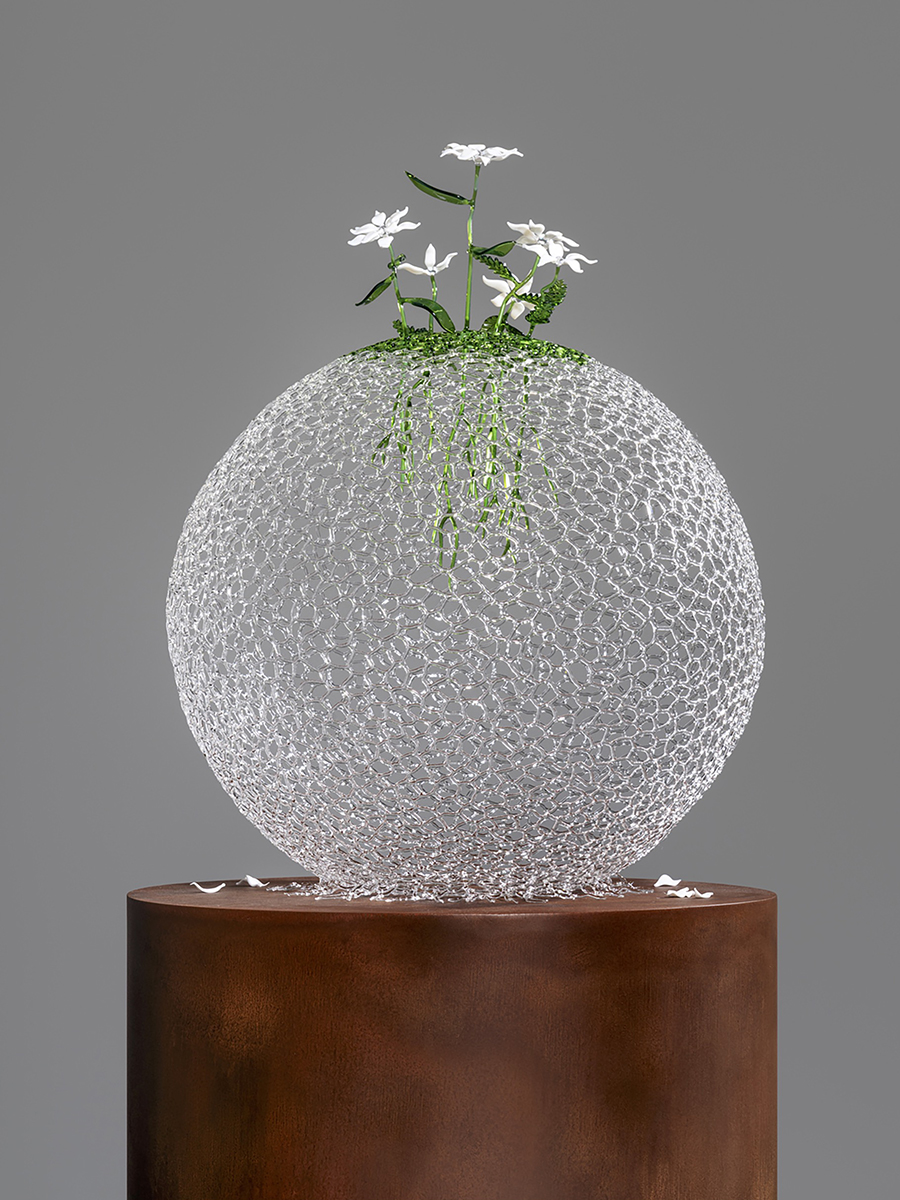
Kelly Akashi, Monument (Regeneration) 2024-2025, Courtesy: Lisson Gallery, Photo: Dawn Blackman *Referential image
From Los Angeles, Kelly Akashi expresses her deep interest in botany and paleontology through motifs of weeds, flowers, shells, and rocks spiraling around the cycle of time in her sculptural works. “Monument (Regeneration)” (2024-2025) is made of flame-worked borosilicate glass and weathering steel, and emits tension between elegance and fragility. These elements of subsistence embrace time’s fluidity and the concept that “all existence contains loss within itself.” The weblike glass structure casts remarkable shadows and patterns on the surface.
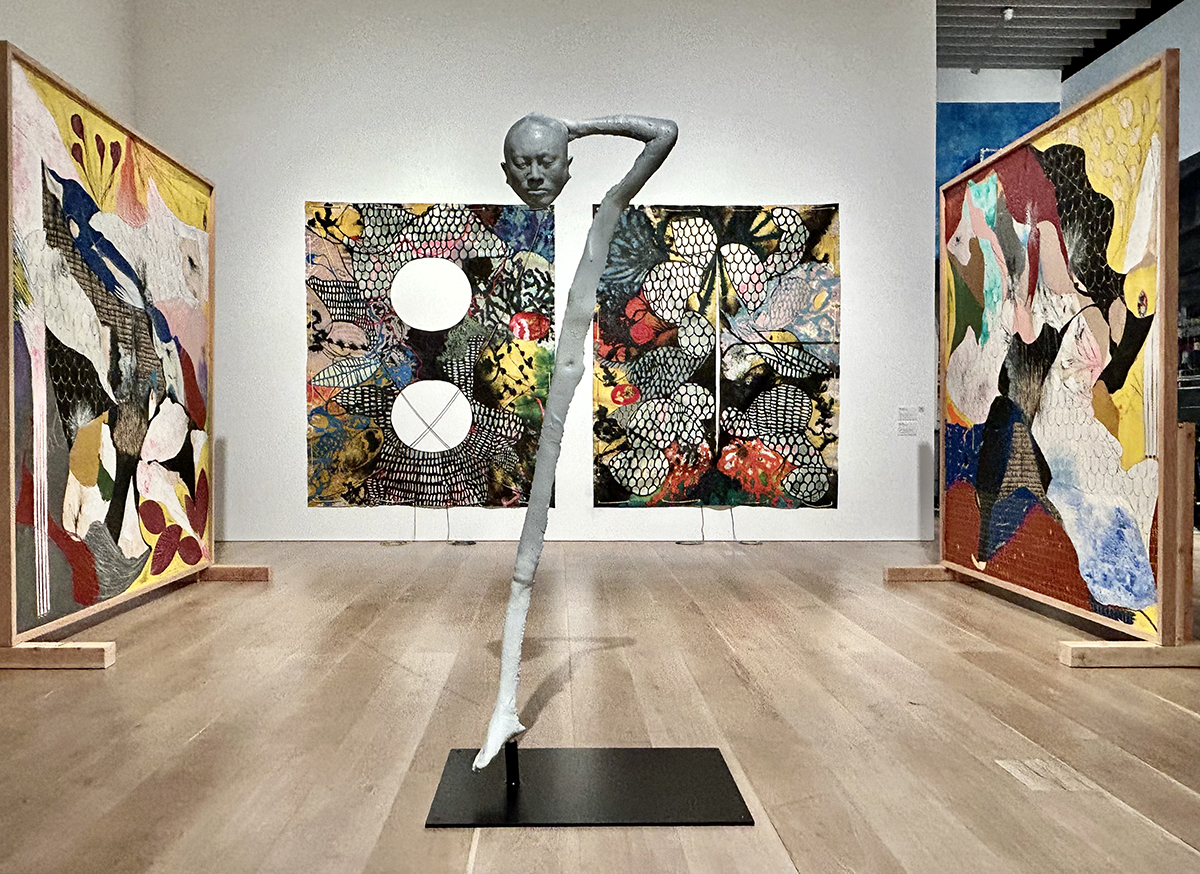
Naotaka Hiro, Installation view: Roppongi Crossing 2025: What Passes Is Time. We Are Eternal., Mori Art Museum, Tokyo, 2025-2026, Photo: Alma Reyes
Four psychedelic wood panel paintings and a riveting life-size bronze sculpture by Naotaka Hiro assert the unity of objects with the human body. The artist, born in Osaka and living in Los Angeles, inserts his legs through cut openings in the canvas, wraps the canvas around himself with ropes, and applies dye and oil stick strokes in such a restricted position. Caught in a physical struggle, he slides underneath the panels and paints with limited visibility, proving the unstable dimension between the object and the subject. For the intriguing head and connected arm and leg sculpture, Hiro coated his body in silicone while holding a fixed position until the material had set, then cast the result in bronze.
Read more ...