


SPRING RISING
HAPPENINGText: Alma Reyes
Spring has arrived in Hakone, and what better way to celebrate the flowering season than with a day at Pola Museum of Art through the exhibition’s spirit of spring.
“SPRING RISING” is being shown at the museum until May 31 this year. Inspired by Hakone’s natural terrain, which developed from centuries of volcanic activity, the showcase fosters the symbiosis between Hakone’s innate beauty and art. A wide array of approximately 120 pieces, including paintings, sculptures, photographs, crafts, and installations by Japanese contemporary artists, such as Kohei Nawa, Shinji Ohmaki, Machiko Ogawa, Leiko Ikemura, and Hiroshi Sugimoto, resonates with the heartbeat of rebirth, memories, and nature. Works by Impressionist/Post-Impressionist masters like Claude Monet, Paul Gauguin, Henri Rousseau, and Vincent van Gogh, as well as modern artists Anselm Kiefer, Su-Mei Tse, and Pat Steir are also on view.
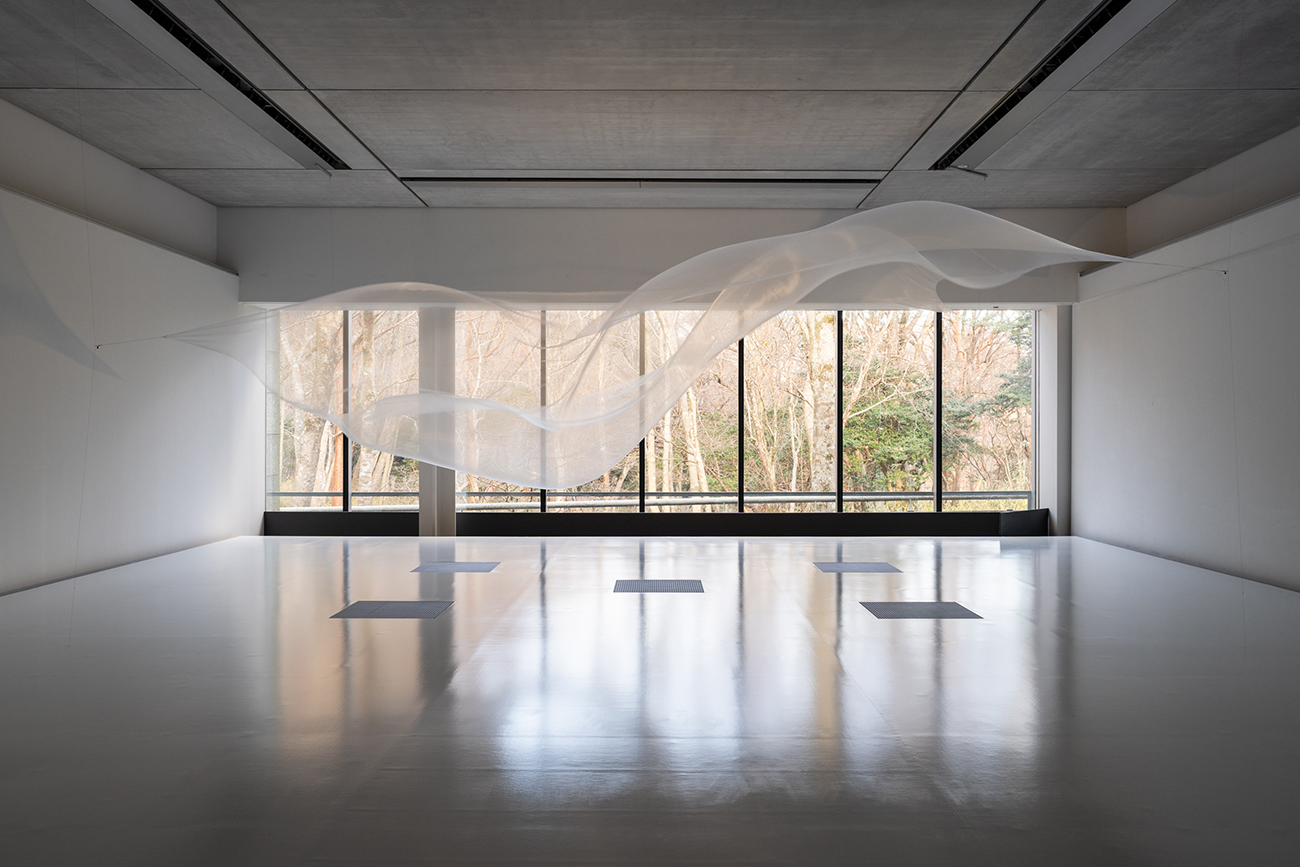
Shinji Ohmaki, Liminal Air Space-Time, 2025 © Shinji Ohmaki Studio
The first gallery introduces Hakone’s volcanic topography, formed about 3,000 years ago. In Shinji Ohmaki’s “Liminal Air Space-Time” (2025), a piece of flowing fabric is suspended in the air; its shape transforms with the rising and falling motion. The volatile atmosphere interacts with the earth below it, enticing viewers to absorb its energy.
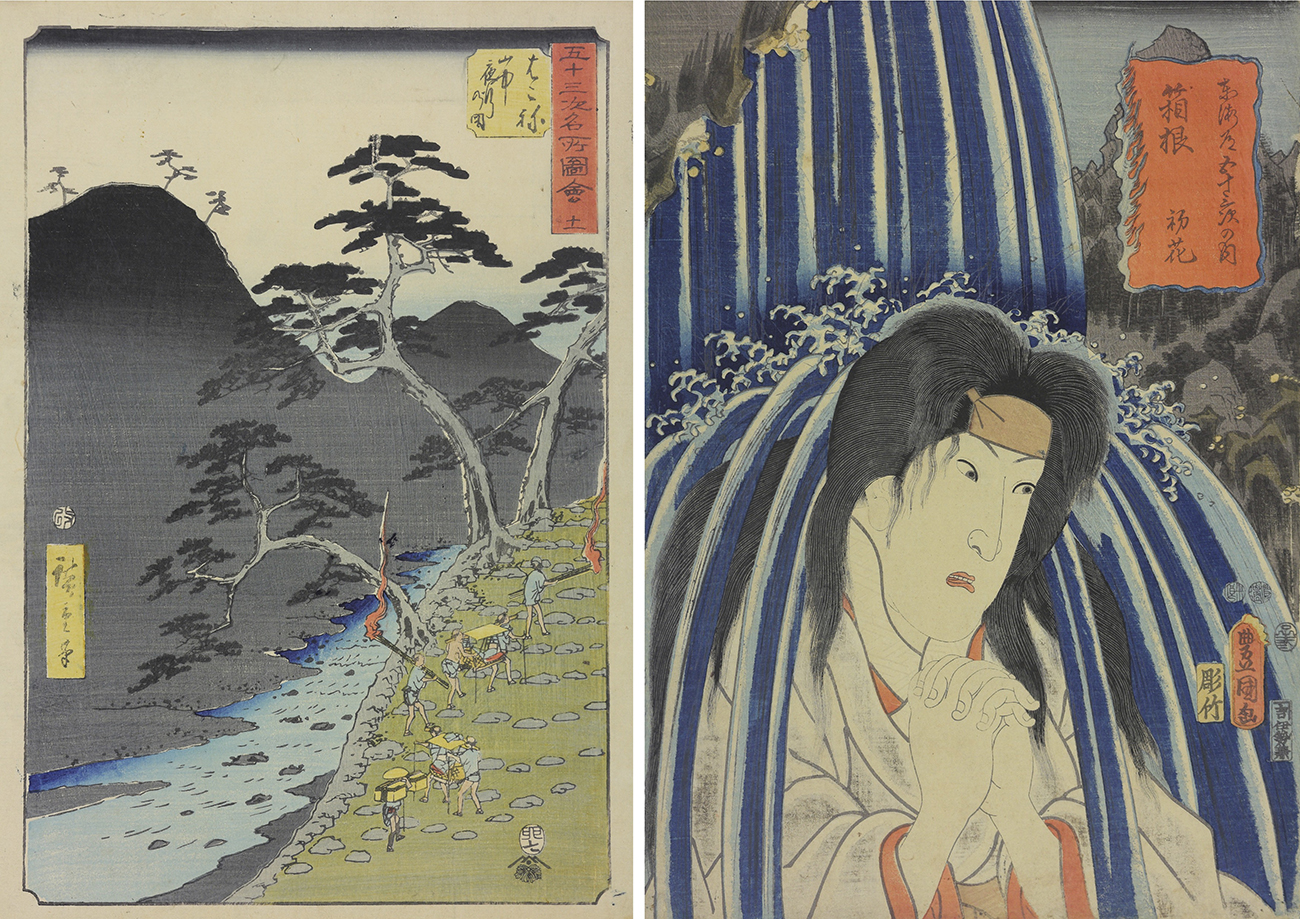
Left: Hiroshige Utagawa, Hakone: Night Procession in the Mountains, no.11 from the series “Famous Sights of the Fifty-three Stations,” 1855, Hakone Museum of History and Folklore [On display: March 6 ‒ May 31, 2026] / Right: Toyokuni Utagawa III, Hakone: Hatsuhana from the series “Fifty-three Stations of the Tokaido,” 1852, Hakone Museum of History and Folklore [On display: December 13, 2025 ‒ March 5, 2026]
Numerous woodblock prints by Ukiyo-e masters, such as Hiroshige Utagawa and Toyokuni Utagawa III, and paintings by Bunzaburo Watanabe, Charles Wirgman, Alfred East, and others, reflect the rugged mountains of the region and captivating views of Lake Ashi and Mount Fuji, as well as the Tokaido route linking Edo with Kyoto. “Hakone: Night Procession in the Mountains, no. 11 from the series ‘Famous Sights of the Fifty-three Stations’” (1855) by Hiroshige Utagawa clearly illustrates travelers, drained and exhausted, as they cross the Hakone Pass on steep slopes. From the late 19th century, when foreigners began to discover the charming resort town, Hakone has become a favorite subject for artists and writers, and is often portrayed with the admirable scenery of Mount Fuji.
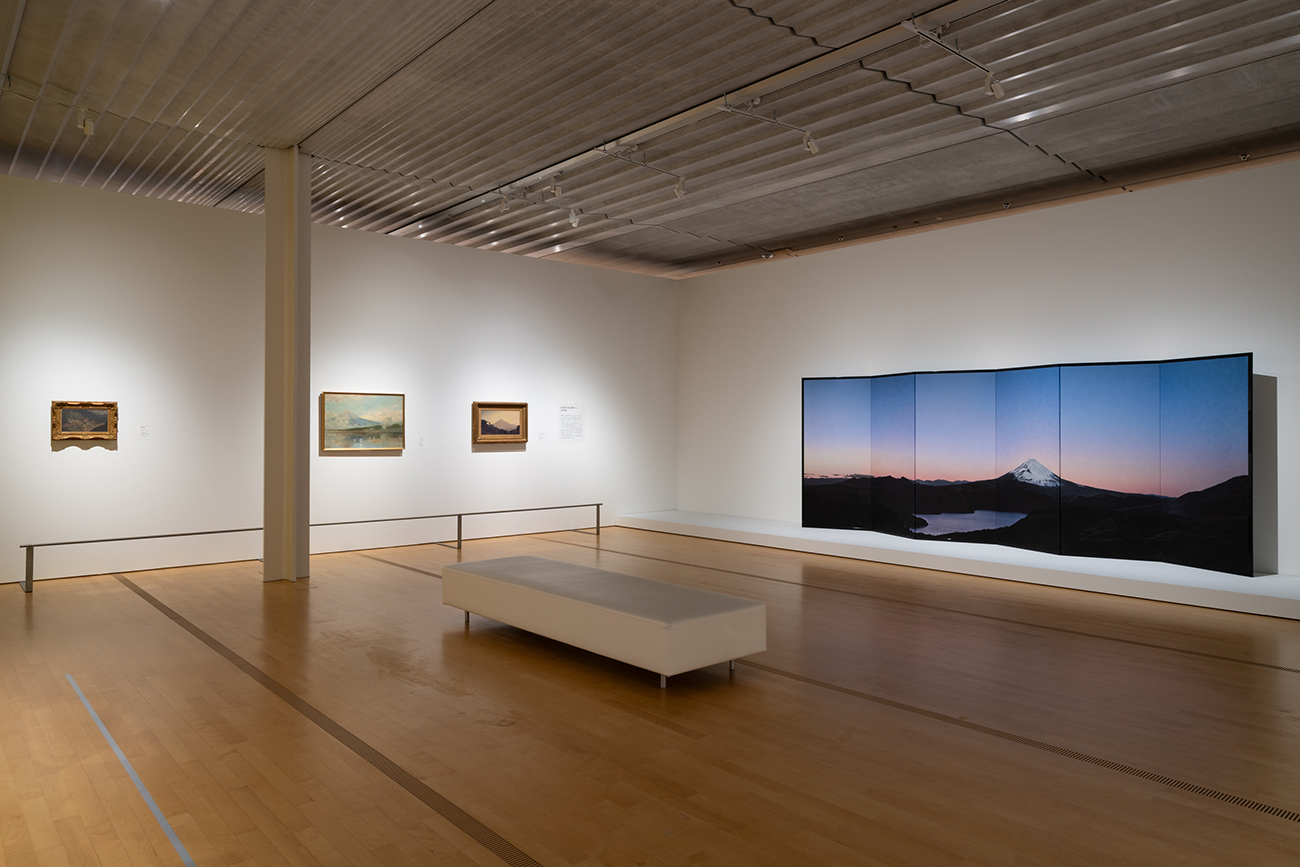
Gallery view, Hiroshi Sugimoto, Mt. Fuji, Daikanzan, 2024 © Hiroshi Sugimoto, Gallery Koyanagi
Among the many striking silhouettes of Mount Fuji displayed, Hiroshi Sugimoto’s “Mt. Fuji, Daikanzan” (2024) captures a dramatic panorama of the iconic mountain and Lake Ashi over the horizon at twilight. Sugimoto envisioned merged images of the mountain before and after its massive explosion 180,000 years ago. Shot from the deck on the Taikanzan observatory during sunset on New Year’s Day, the photograph elegantly embraces the transition from day to night on a byobu folding screen, further illuminating the grace of Japanese traditional art.
Some works also depict beautiful women relaxing at hot spring resorts, and dressed in fashionable attire of the era. These impressions circulated throughout advertising media, encouraging people to travel.
Hakone is also a favored setting for myths and folklore, ranging from legends about dragons to characters with superhuman strength. The engaging narratives became popular subjects for Ukiyo-e, kabuki, and Joruri puppet theater, consequently ushering in pilgrimages to Hakone.
Read more ...