


HIROSHI SUGIMOTO: EXTINCTION
HAPPENINGText: Alma Reyes
From the late 1990s, Sugimoto began to develop “forms” created by human intellect and imagination. His “Conceptual Forms” and “Stylized Sculpture” series, shown in Chapter 2 of the exhibition, mark the line between science and art by using mathematical formulas to produce unpredictable, abstract sculptures. “Conceptual Forms 0003, Dini’s surface: a surface of constant negative curvature obtained by twisting a pseudosphere” (2004) is a clear example of how Sugimoto reconstructed a mere plastic model (originally manufactured in Germany during the late 19th to 20th centuries that studied non-Euclidean mathematics) into a dramatic piece of sculpture. By applying a stark lighting effect against the bold, black background, he was able to carve out the model in a stereometric form (the art and science of measuring three-dimensional solid figures).
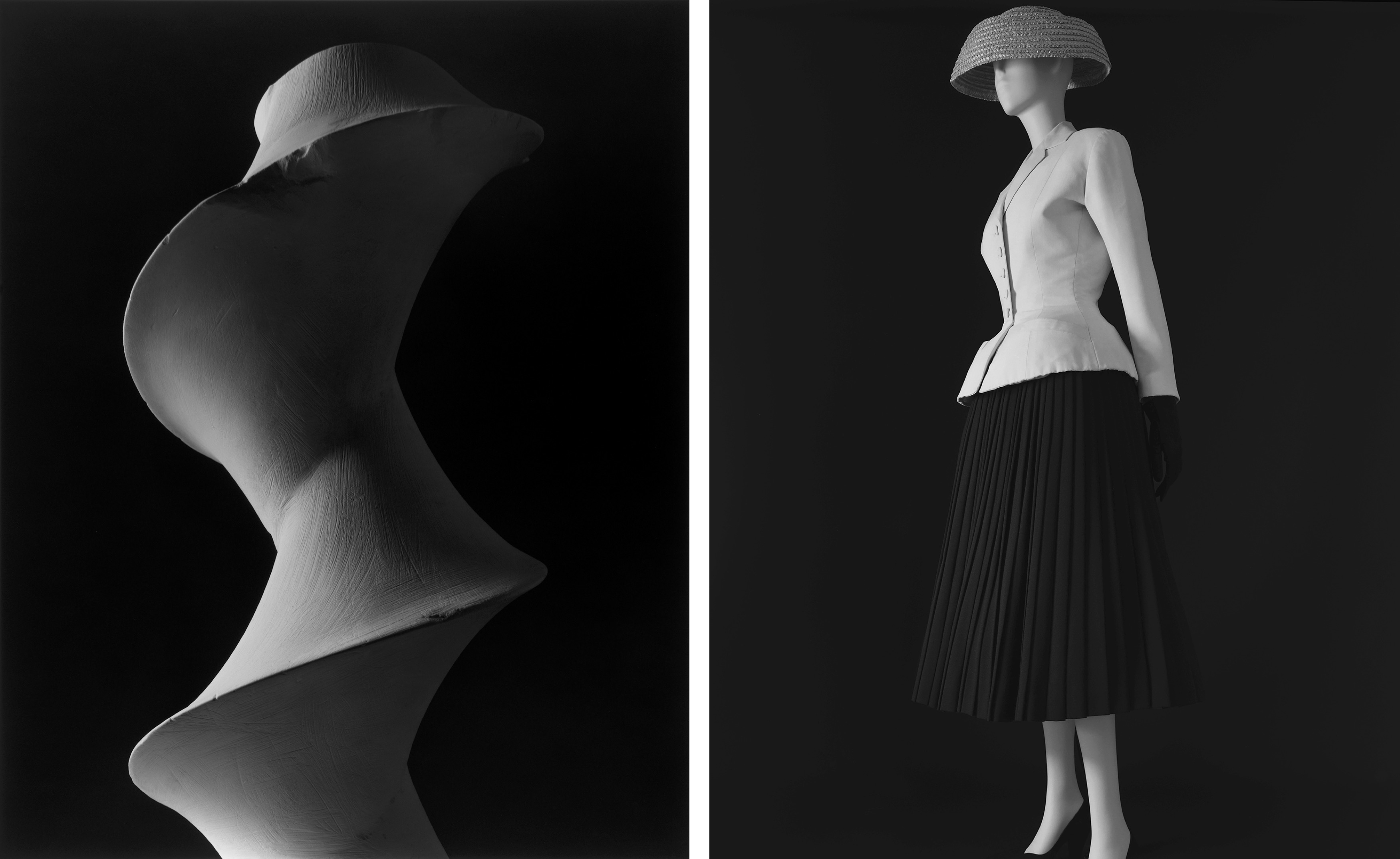
Left: Hiroshi Sugimoto, Conceptual Forms 0003 Dini’s surface: a surface of constant negative curvature obtained by twisting a pseudosphere, 2004 © Hiroshi Sugimoto/Courtesy of Gallery Koyanagi; Right: Hiroshi Sugimoto, Stylized Sculpture 120 [Bar suit, Haute Couture Spring-Summer 1947, Corolle line], Christian Dior Couture collection, Paris
, 2025 © Hiroshi Sugimoto, Object: © Christian Dior Couture collection, Paris
By a similar approach, the elegantly photographed “Stylized Sculpture 120, Christian Dior, Bar, 1947″ (2025) elevates Dior’s classical “Soirée dress” from a fashion symbol to an artistic interpretation. We learn to picture the human body and the artificial skin that envelops it as a modern sculpture. The impeccable composition of shades from white to grey and black gives the wardrobe a fresh, updated look.
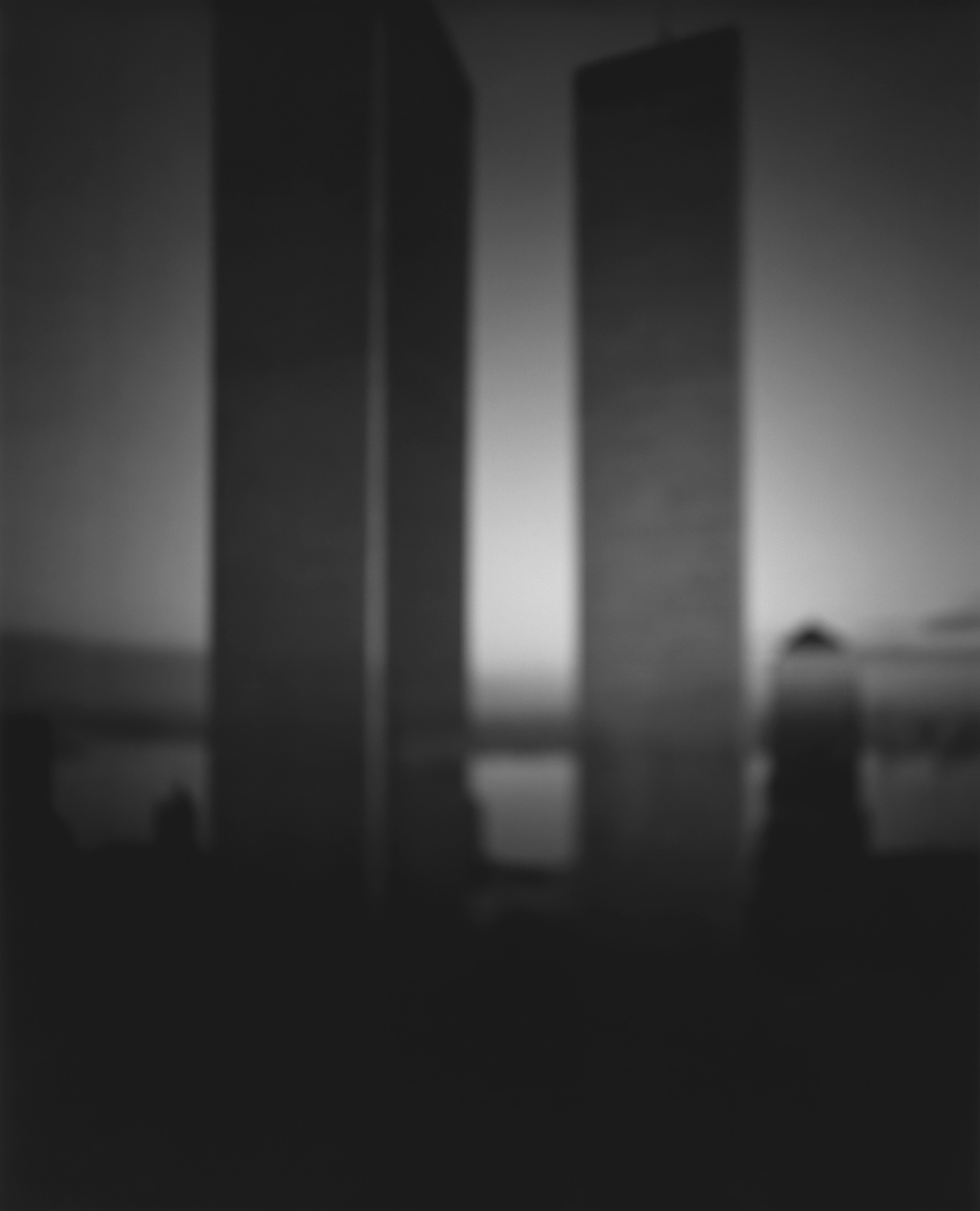
Hiroshi Sugimoto, World Trade Center 1997 © Hiroshi Sugimoto/Courtesy of Gallery Koyanagi
In the “Architecture” series, Sugimoto used his large-format camera to blur powerful representations of archetypal 20th-century buildings. He imagined that they recreate the architects’ visions before the buildings were constructed. As seen in the epochal “World Trade Center” (1997), the washed-out outcome strips the structures of ornamentation and foregrounds their functional form.
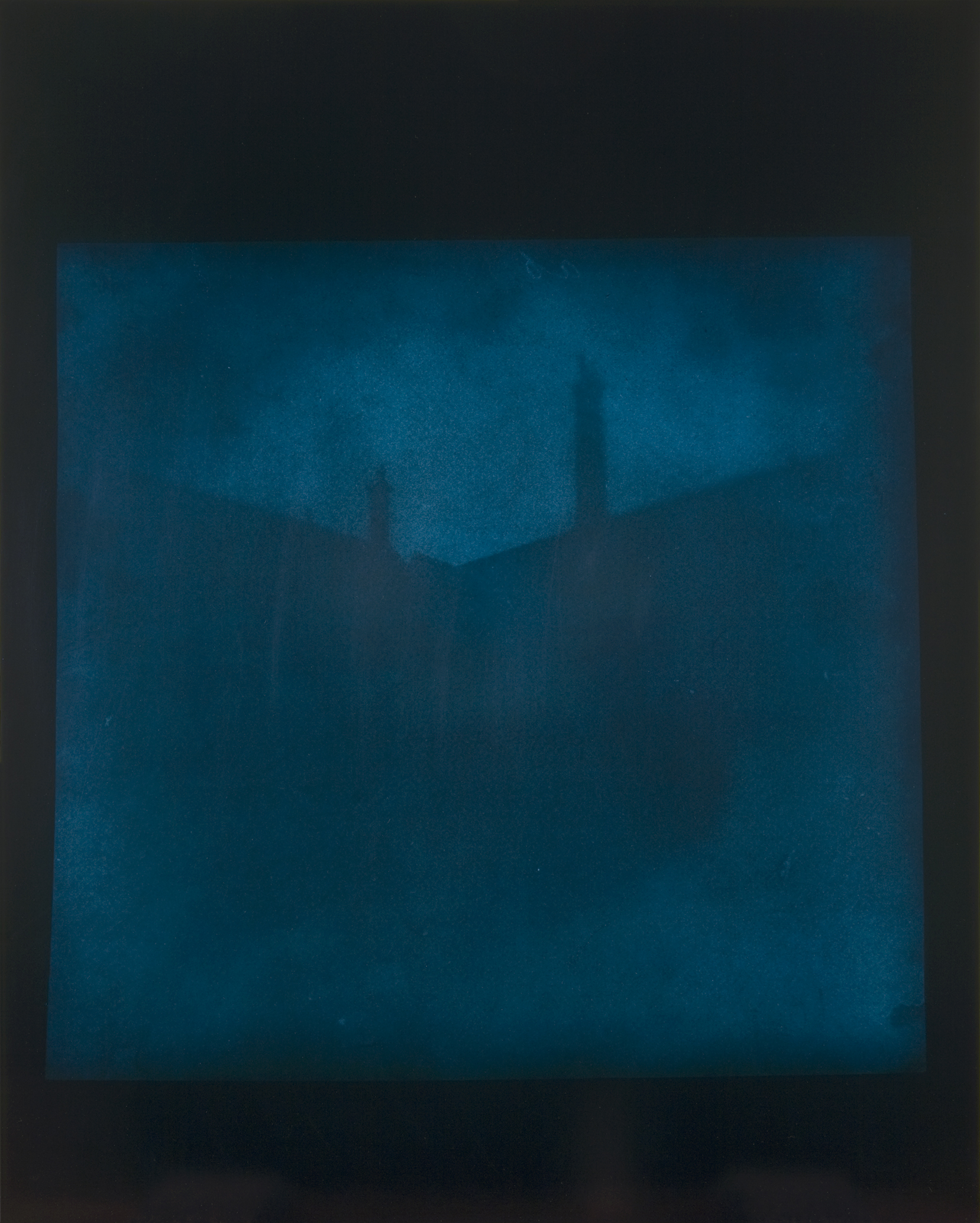
Hiroshi Sugimoto, Photogenic Drawing 017, Roofline of Lacock Abby, circa 1835-1839, 2008 © Hiroshi Sugimoto/Courtesy of Gallery Koyanagi
Another exceptional photographic technique that Sugimoto enhanced is “Photogenic Drawing,” as illustrated in the third section. He was influenced by scientist and photography pioneer William Henry Fox Talbot’s experiment of reversing negatives to obtain an accurate positive image by perfectly balancing lightness and darkness. Sugimoto printed Talbot’s photogenic drawing negatives and treated them with toning agents to replicate the brilliant shades of the original sheets. In “Roofline of Lacock Abbey, circa 1835–1839” (2008), the silhouette of the building in the background dissolves into soft, dreamlike mist that exudes an air of mystery.
Read more ...