


YUNOKI SAMIRO: THE ETERNAL NOW
HAPPENINGText: Alma Reyes
Katazome, the craft of traditional Japanese stencil dyeing technique that uses rice paste as a resist to apply patterns to fabric, has been ingrained in Japanese textile art since the Heian period. From the Muromachi era, the method became widely used for formal wear among the samurai. Today, the dyed fabrics are made not only for garments but also for household products such as furoshiki wrapping cloths, wall hangings, quilts, table runners, and other accessories.
One of the country’s celebrated textile artists who particularly engaged in katazome and Chūsen dyeing was Samiro Yunoki (1922-2024). The arresting vibrancy of his colors and patterns has made him a valuable presence in the Mingei folk art movement and a powerful influence in the growth of Japanese printmaking and collages.

Gallery view, Yunoki Samiro: The Eternal Now, Tokyo Opera City Gallery, Photo: Alma Reyes
Tokyo Opera City Gallery is happy to present “Yunoki Samiro: The Eternal Now” until December 21st, a comprehensive retrospective of Samiro’s numerous works spanning his 75-year career, and his journeys throughout Japan and abroad that have shaped his creative endeavors.
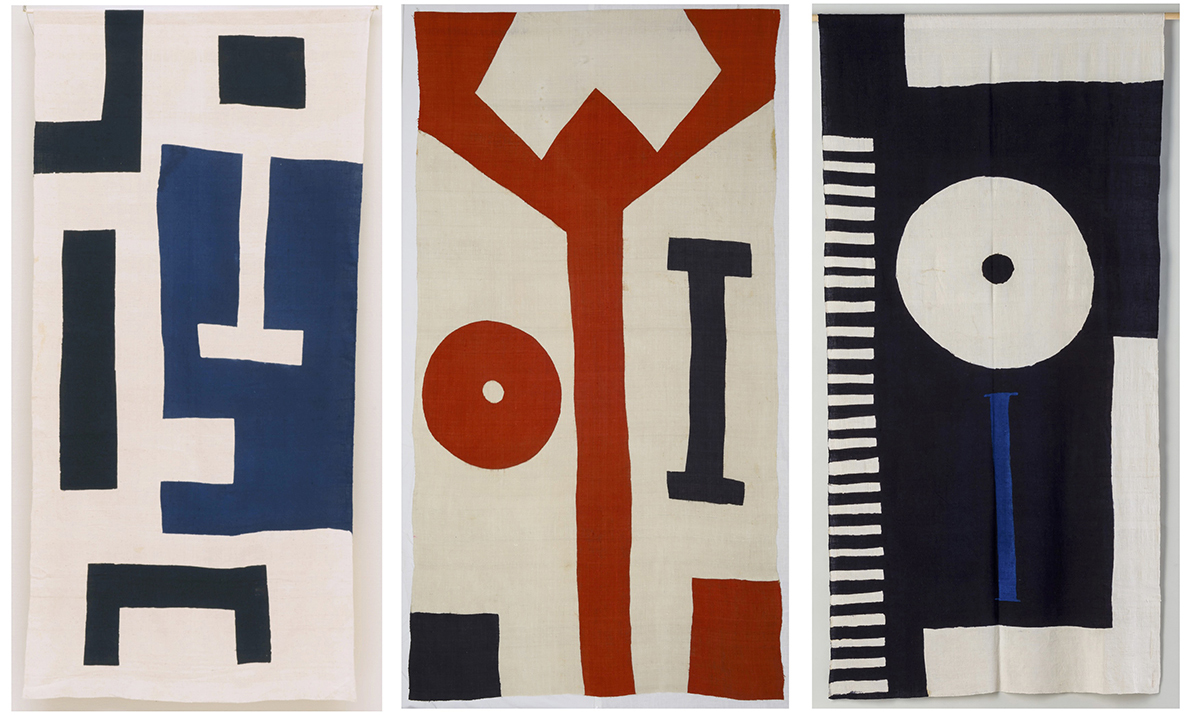
Katazome: Samiro Yunoki, Left: Untitled 2019-2, 2019, Private collection / Center: 2016, stencil-dyeing (katazome), 2016, The Japan Folk Crafts Museum, Photo: Chikako Murabayashi / Right: Memory, 2019, IDÉE
The world of art was not new to the young Samiro, who was born into a family of artists — his father being a Western-style painter and his grandfather a Japanese-style painter. After taking brief studies in art history at the Tokyo Imperial University (currently the University of Tokyo), Samiro found work at the Ohara Museum of Art in Kurashiki, Okayama. It was here that he encountered the master craftsman of katazome, Keisuke Serizawa and the works of Soetsu Yanagi, known father of the Japanese Mingei movement. The bold, stencil-dyed patterns pasted on richly textured handmade paper fascinated Samiro greatly, leading him eventually to focus his creations on Mingei traditions. At the same time, he incorporated a Western mood that suited contemporary lifestyles.
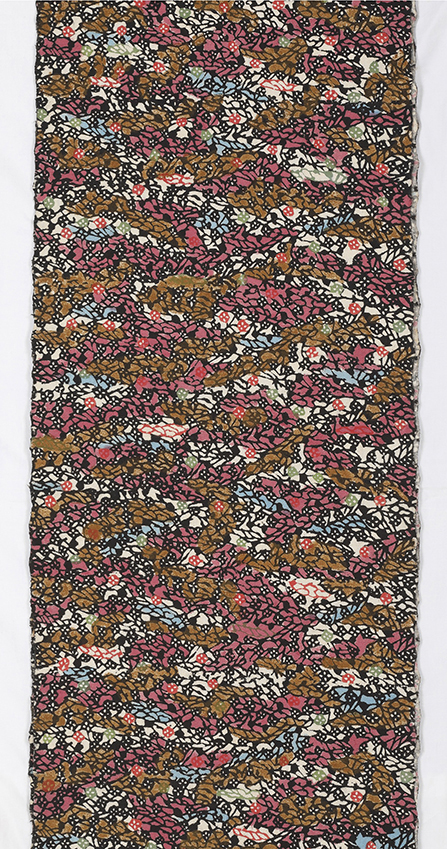
Samiro Yunoki, Bingata style textile, stencil-dyeing (katazome), 1948, The Japan Folk Crafts Museum, Photo: Chikako Murabayashi
His first work as exhibited, “Bingata style textile, stencil-dyeing (katazome)” (1948), was presented to Yanagi and has now become a major part of the Japan Folk Crafts Museum. The intricate petals and leaves glide rhythmically in an elegant fashion. Through Yanagi’s introduction, Samiro apprenticed under Serizawa. Since submitting his work to the Kokugakai Tenrankai exhibition of Japanese arts and crafts in 1949, and holding his initial solo exhibition at the Takumi craft gallery in Tokyo in 1955, he gradually earned a reputation as an excellent artist who diversified his interests, branching into painting on wood, glass, and textile materials. In the same year, he embarked on a full-time tenure as a lecturer at Joshibi University of Art and Design. Here, he explored the technique of Chūsen dyeing. In 1958, he was awarded a bronze medal for his katazome wallpaper presented at the Brussels Expo.
Read more ...