


ETTORE SOTTSASS: DESIGN BEGINS WHERE MAGIC BEGINS
HAPPENINGText: Alma Reyes
As political instability in Italy escalated during the 1970s — igniting strikes and terrorist attacks — Sottsass sought an escape from the turmoil. He traveled to Catalonia, Spain, where he bathed in nature and explored “architecture as design” by experimenting with stone, wood, cardboard, rope, and chains. After extending his journey to Greece, Israel, and the U.S., he developed “Metaphors,” a photographic series that captured the landscapes he encountered alongside notes reflecting on the meaning of design. Viewers can discover these rare monochrome photographs in the third section.
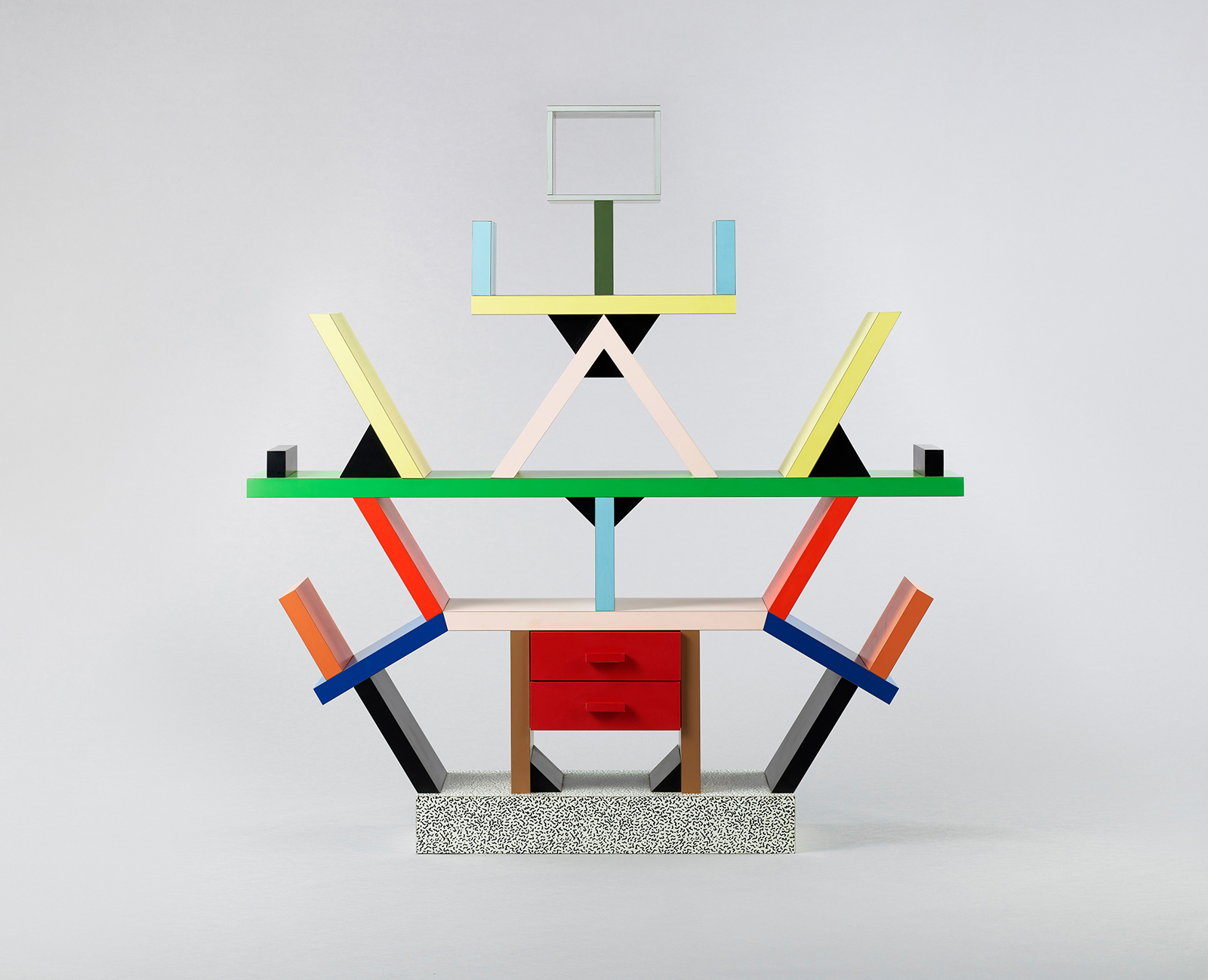
Ettore Sottsass, Carlton, 1981 (design/produce), 1981 (produced by Memphis Milano), Artizon Museum, Ishibashi Foundation © Erede Ettore Sottsass
Sottsass joined Studio Alchimia in 1978, but eventually formed his own group, the legendary Memphis. This new design movement embodied innovative color compositions, forms, materials, and decorative patterns. A special room in the fourth section illuminates three pieces using alternating colored spotlights: “Dining Chair” (1979), “Carlton” (1981), and “Casablanca” (1981). “Carlton,” from the first Memphis collection, is considered the designer’s most recognizable creation. Made of resin-laminated plywood in varied painted finishes, it depicts a square-headed robot or a Hindu god with protruding arms. The “Bacterio” pattern on the rectangular base is a timeless Sottsass signature.
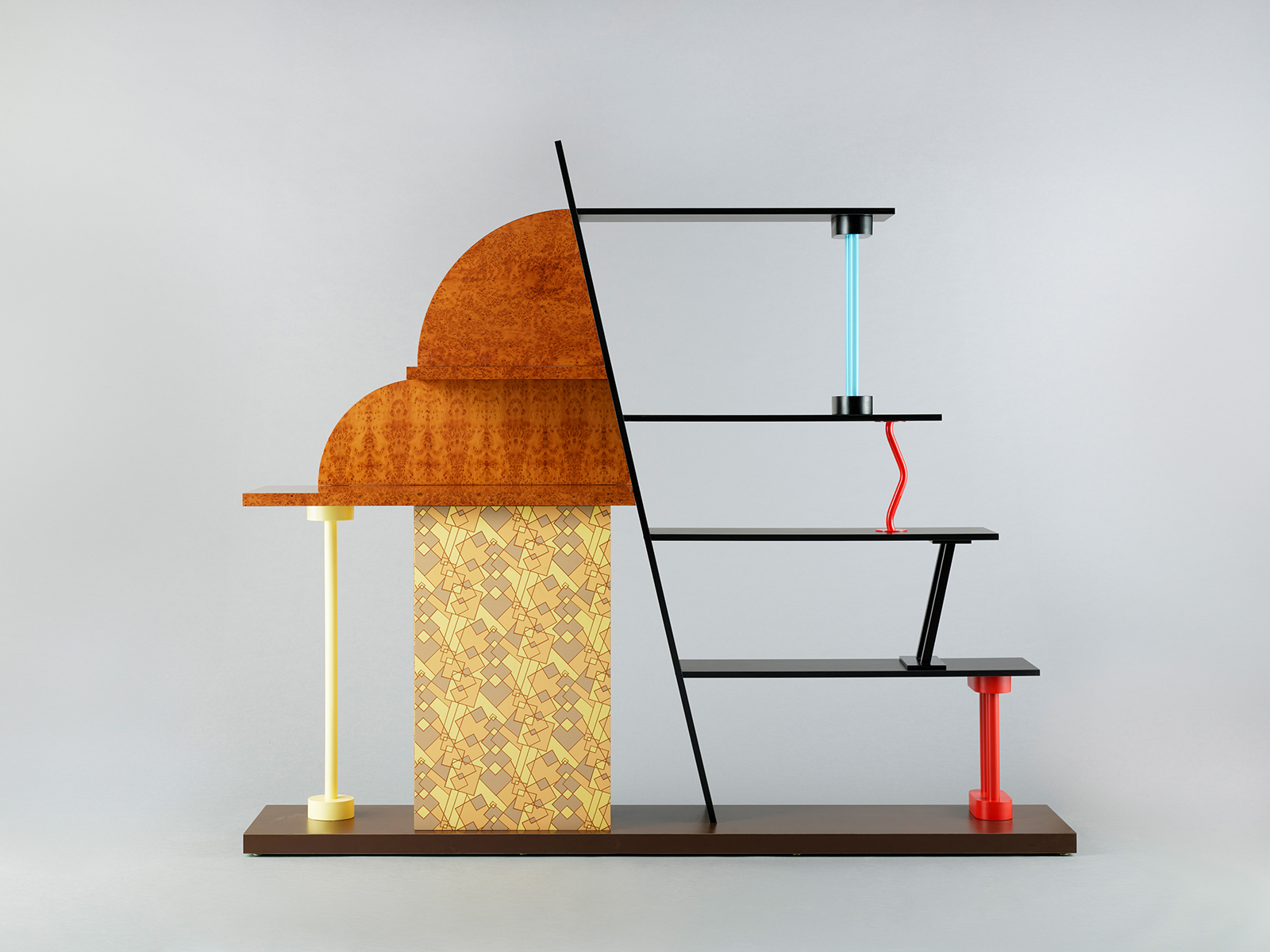
Ettore Sottsass, Malabar, 1982 (design/produce), 1982 (produced by Memphis Milano, fabricated by Bitossi) © Erede Ettore Sottsass
Other notable furniture on display includes “Malabar” (1982), which reveals a beautiful grain and abstract pattern on resin-laminated wood, and “Mandarin” (1981), an exquisite glass-topped table with “Rete” motif legs highlighted in red at the top and bottom, among others.
Also exhibited are two tables by Shiro Kuramata (“Tokyo,” 1983) and Michele de Lucchi (“Sebastopole,” 1982), both of whom joined the Memphis group.
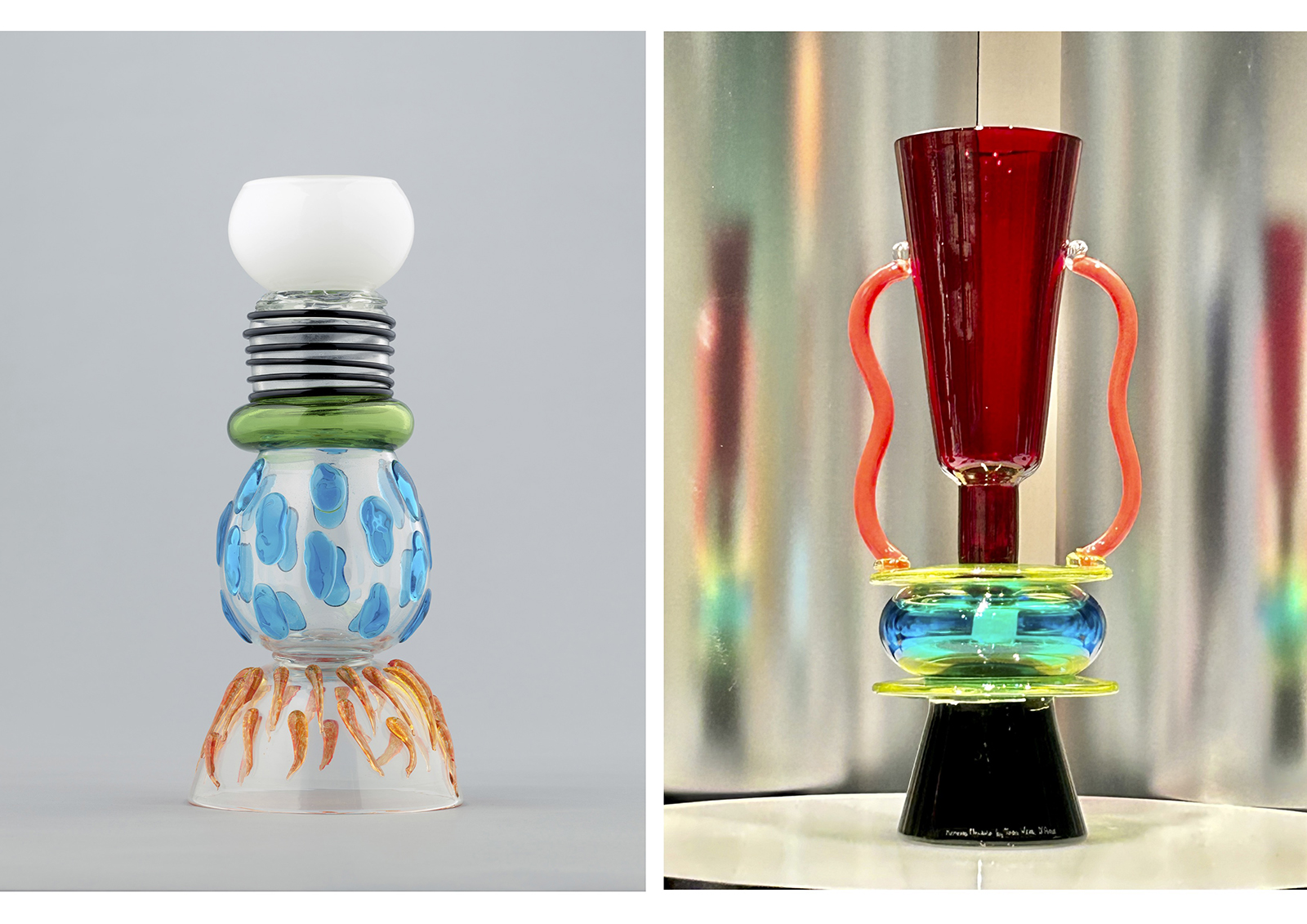
Left: Ettore Sottsass, Alcor, 1983 (design/produce) © Erede Ettore Sottsass / Right: Ettore Sottsass, Sirius, 1982 (design/produce), Memphis Milano; Toso Vetri d’Arte © Erede Ettore Sottsass, Photo: Alma Reyes
A wonderful array of vase collections from the Memphis period shows vibrant colors and eclectic shapes, which do not merely emphasize decoration but rather generate a sense of vital energy. Echoing asymmetrical totem-like silhouettes and childlike sculptures, the vessels feature rounded bodies, conical elements, and spherical bases. Examples are “Alcor” (1983), an attractive blown-glass vase of voluptuous volumes stacked on top of one another, and “Sirius” (1982), also hand-blown, featuring a cone-shaped black base that supports a pale blue sphere sandwiched between two yellow rings. The brilliant red body with undulating handles resembles a trophy.
Read more ...