


LUCAS MUSEUM OF NARRATIVE ART
PLACEText: Victor Moreno
Then, of course, there is Star Wars. The room gathers vehicle designs, props, costumes and concept illustrations from the first six films, drawn from the complete Lucas Archives. It’s easy to see it as fan service, but it’s also a reminder that Lucas spent his career breaking the tools of his own medium: The Phantom Menace was the first major live-action film projected digitally, Attack of the Clones the first shot entirely on digital. Every one of those moves was called a gimmick, or a threat to cinema, at the time. It echoes what generative AI tools are doing today, and the parallel is hard to miss. The tools always change; the hunger for the story doesn’t.
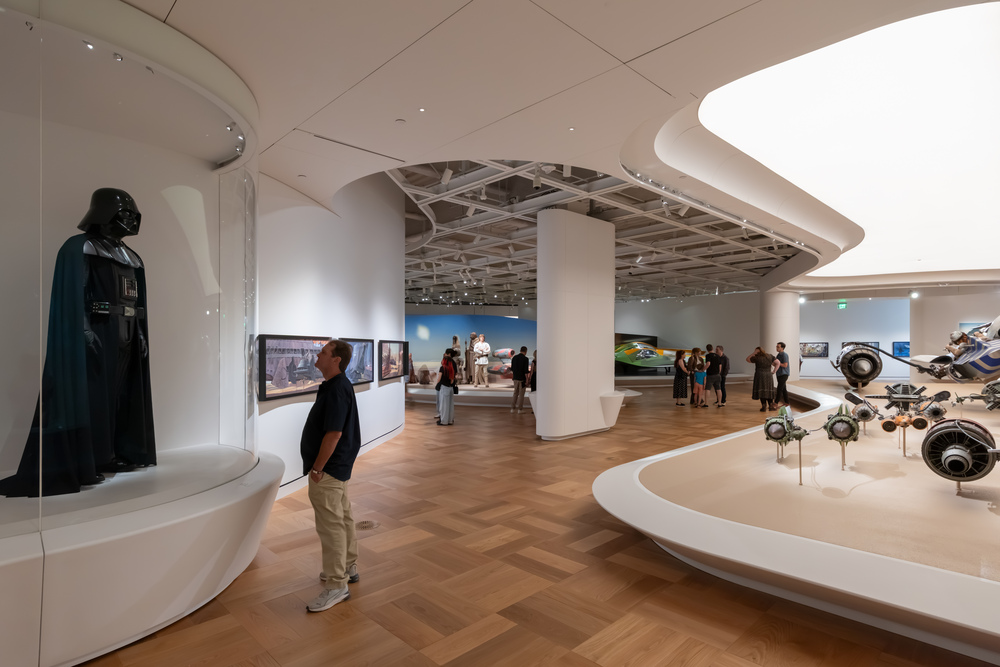
Photo: Iwan Baan
Also worth a mention are the two cinemas on the ground floor, running continuous screenings from an archive of works that helped invent cinema itself: a 1942 Superman cartoon, documentaries on the moguls who built the Hollywood studios, and the museum’s own films on the story of narrative art. Together they give you a feel for where screen storytelling comes from, and for everything that grew up around this factory of dreams.
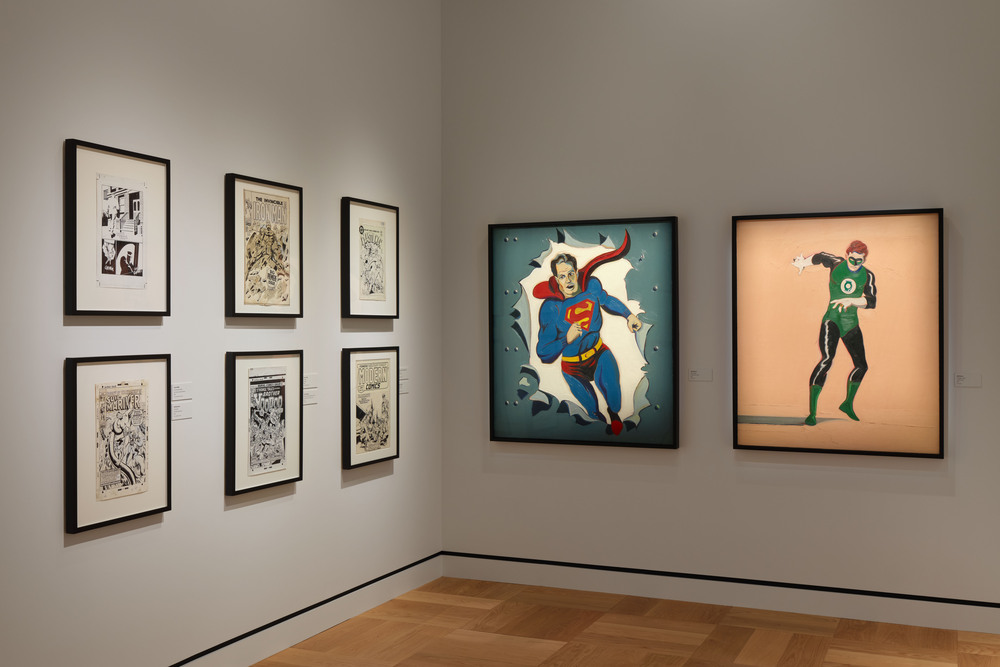
Photo: Paul Salveson
All in all, the most surprising was the pairing of the building and the archive. Walking through the collection Lucas has gathered over the years feels like being let in on a secret: the sources of inspiration behind arguably the most popular fictional universe ever put on the silver screen, laid out one wall at a time. The building surprises because of how outward-facing the whole thing is. The collection is surprising because it’s rare to see someone like George Lucas put his fortune into gathering these works and simply calling them what they are: art. And in the bigger picture, the museum is doing something for Los Angeles itself. This is a city that has spent the last few years watching its film industry change shape, and it is hungry for new blood, new investment and new energy. With the 2028 Olympics on the horizon, the Lucas Museum feels like one of the first chapters of a rebirth, a sign that LA is still the place where new stories get told.
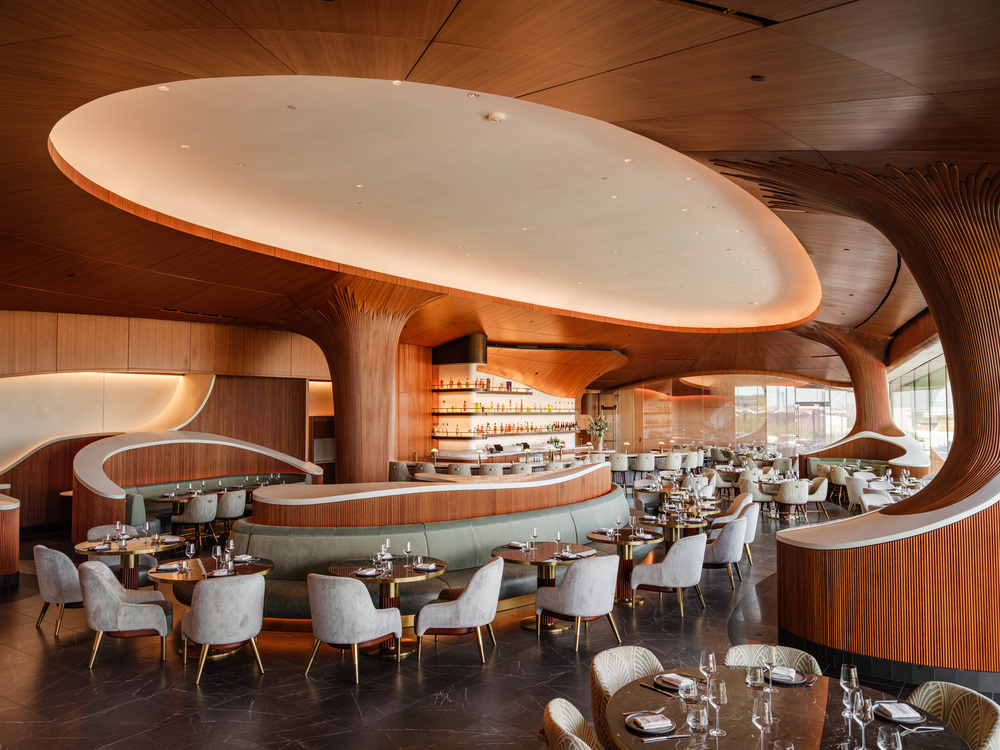
Photo: Tom McGovern
The park around the building gives South LA some much-needed green space, and residents of the surrounding 90037 zip code get in free. Beyond the two cinemas on the lower floors, there’s a free research library and, yes, a restaurant called Skywalker Grill, because some jokes are too good to pass up. Hobson put it plainly: the point is that people from every walk of life should walk in and, somewhere in these galleries, see themselves reflected back. Lucas has said the artists in this collection connected “our modern imaginations with our ancient emotions.” That might be the best way to read the place: not a monument to one man’s franchise, but a long, looping argument that the images we grew up on, the ones we were told were just for kids, were telling us who we are all along. They deserve to be in a museum. Now they are.
Lucas Museum of Narrative Art
Opening Hours: 10:00 – 17:00 (Friday till 21:00; Saturday 9:00 – 21:00; Sunday 9:00 – 17:00)
Closed on Tuesday
Place: Lucas Museum of Narrative Art, Exposition Park
Address: One Lucas Plaza, 3800 S. Vermont Ave., Los Angeles, CA 90037
https://lucasmuseum.org
Text: Victor Moreno
Photos: Courtesy of Lucas Museum of Narrative Art © & TM Lucasfilm Ltd. All Rights Reserved.
 1 2