


SPRING RISING
HAPPENINGText: Alma Reyes
In Leiko Ikemura’s “Genesis I” (2014-2017), otherworldly creatures and spirits inhabit a fantasy land masked in cloudy shades. Ikemura is divides her time between Japan and Berlin. She is best known for her surrealistic images of humans and nature.
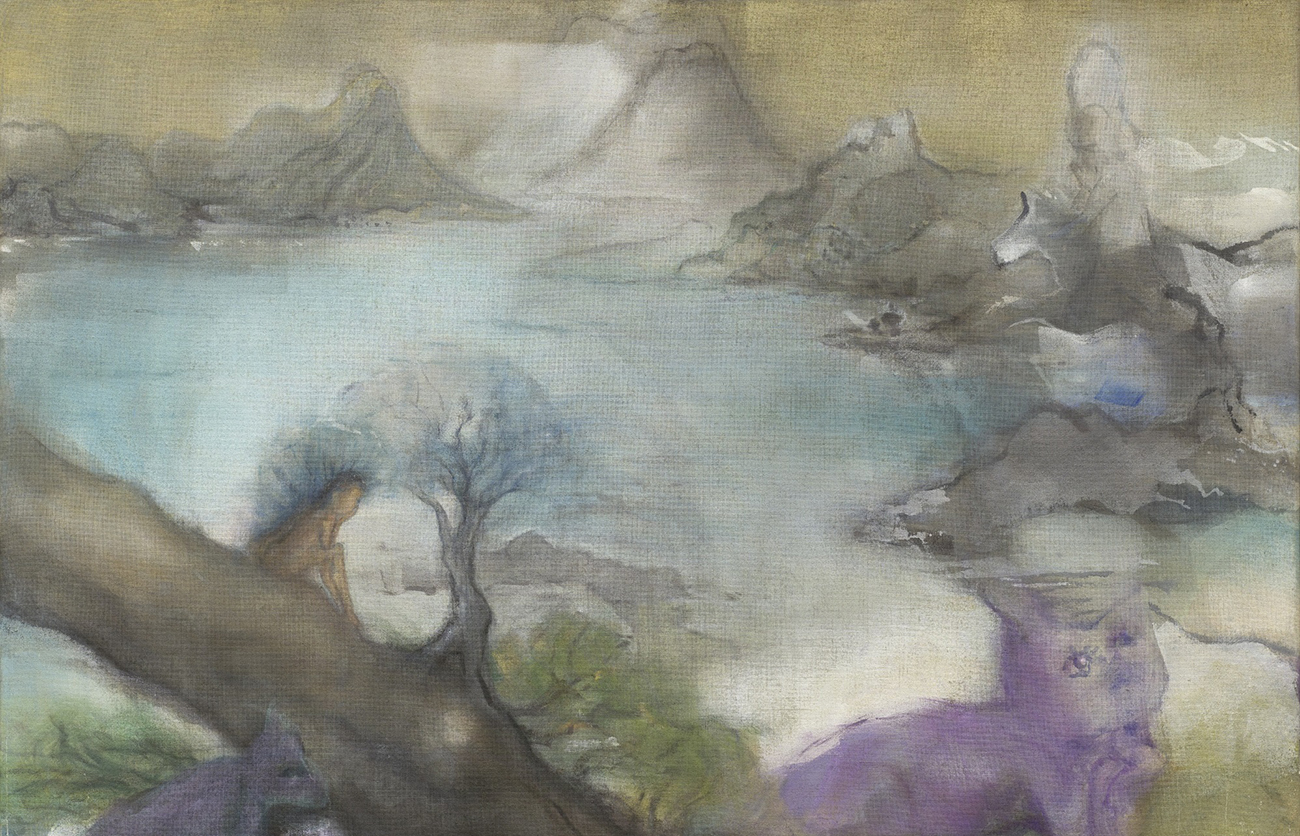
Leiko Ikemura, Genesis I, 2014‒2017, Pola Museum of Art © Leiko Ikemura
Naofumi Maruyama also visited Hakone, particularly Sengokuhara. His radiant landscape paintings project soft renditions of light and color.
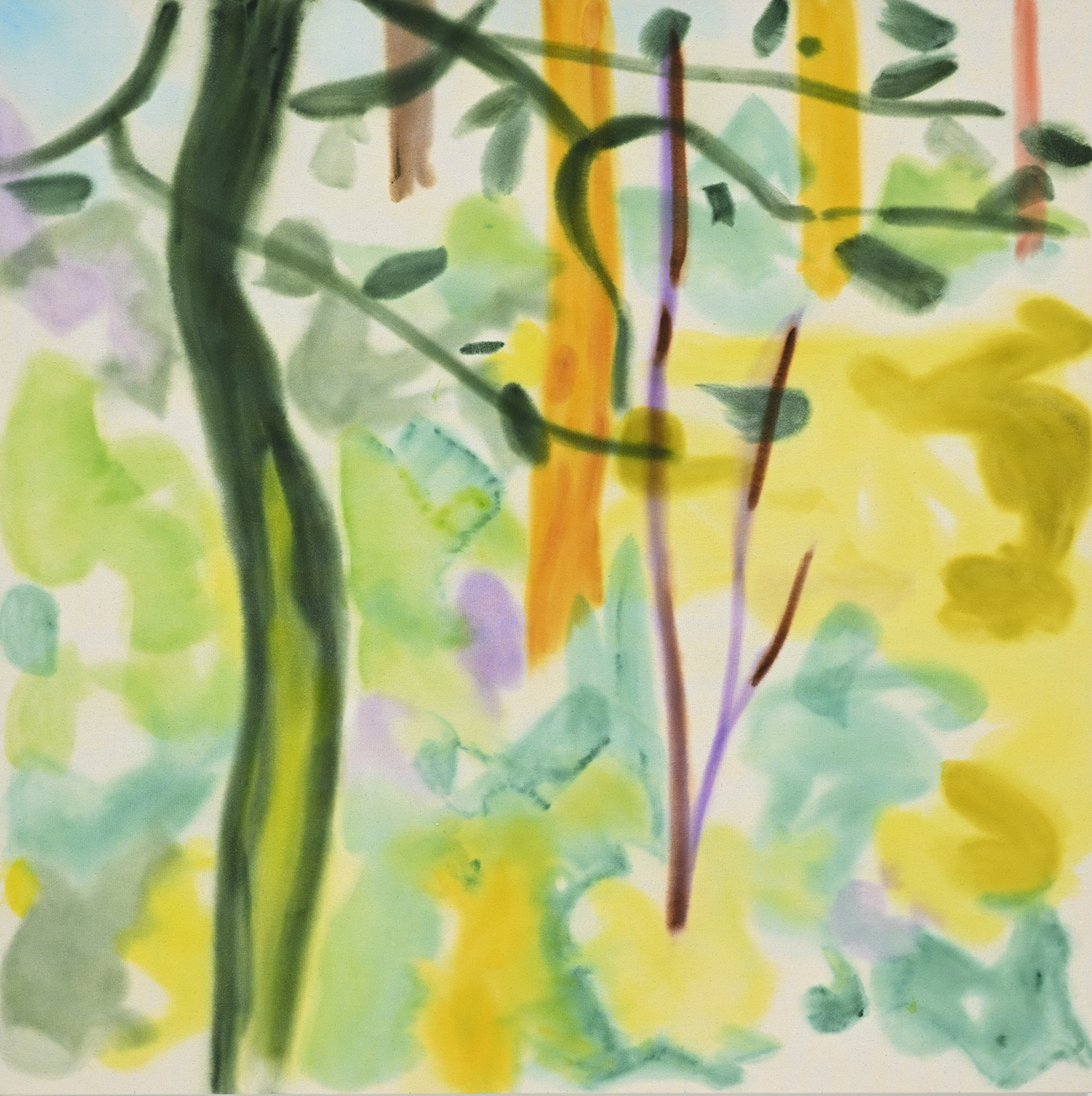
Naofumi Maruyama, Kicking the Water: Sengokuhara, 2022-2023, Collection of the artist © Naofumi Maruyama, Courtesy of ShugoArts, Photo: Shigeo Muto
In the section, “Earth, Water, Fire, Wind,” a huge platform with boulder-like sculptural objects in conveys ceramicist Machiko Ogawa’s perception of how materials like soil and glass can change under the effects of heat and gravity over a long period of time. The artist’s “Lunar Fragments 25-P” (2025) reveals the rocks with crater-like filled surfaces of the moon that appear to carve nature’s complexities. Ogawa has found arresting joy in exploring the layers of textures and alterations of mineral forms.
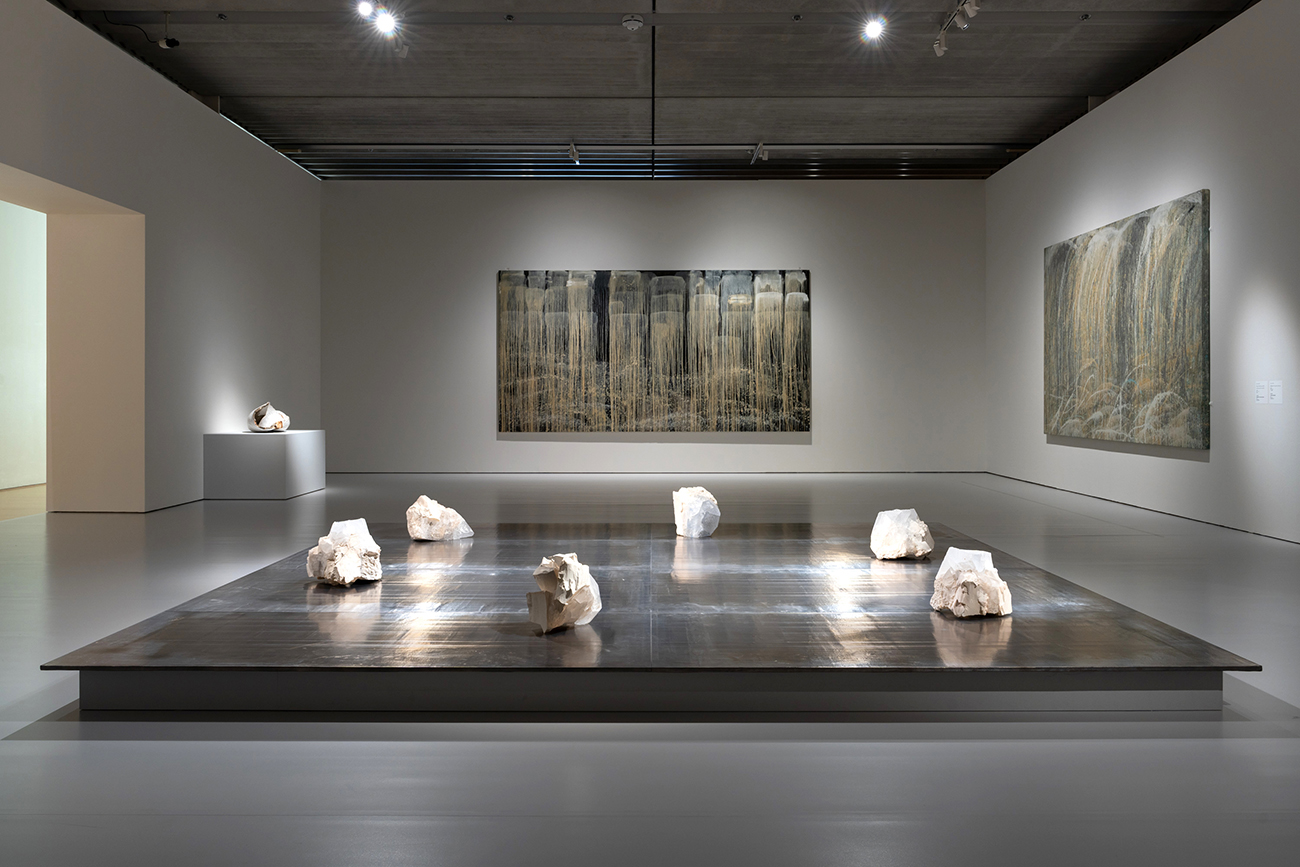
Gallery view, Machiko Ogawa, Lunar Fragments 25-P, 2025, Collection of the Artist / Behind: Pat Steir, Waterfall of Ancient Ghosts, 1990, Private Collection / Calming Waterfall, 1989, Pola Museum of Art
Surrounding it are Pat Steir’s “Calming Waterfall” (1989) and “Waterfall of Ancient Ghosts” (1990). The two large, elongated canvases show paint poured freely under the gravity’s pull, forming beautiful cascades. The rhythm and flow of the water sync with the depth of time and nature’s four basic elements.
Read more ...