


YUNOKI SAMIRO: THE ETERNAL NOW
HAPPENINGText: Alma Reyes
The opening hall of the first section on Mingei folk art instantly showcases huge, hanging textiles from the ceiling and on the walls created using both katazome and Chūsen dyeing. They illustrate geometric, Romanesque, and nature patterns in strong blue, black, red, green, and brown hues made from 1949.
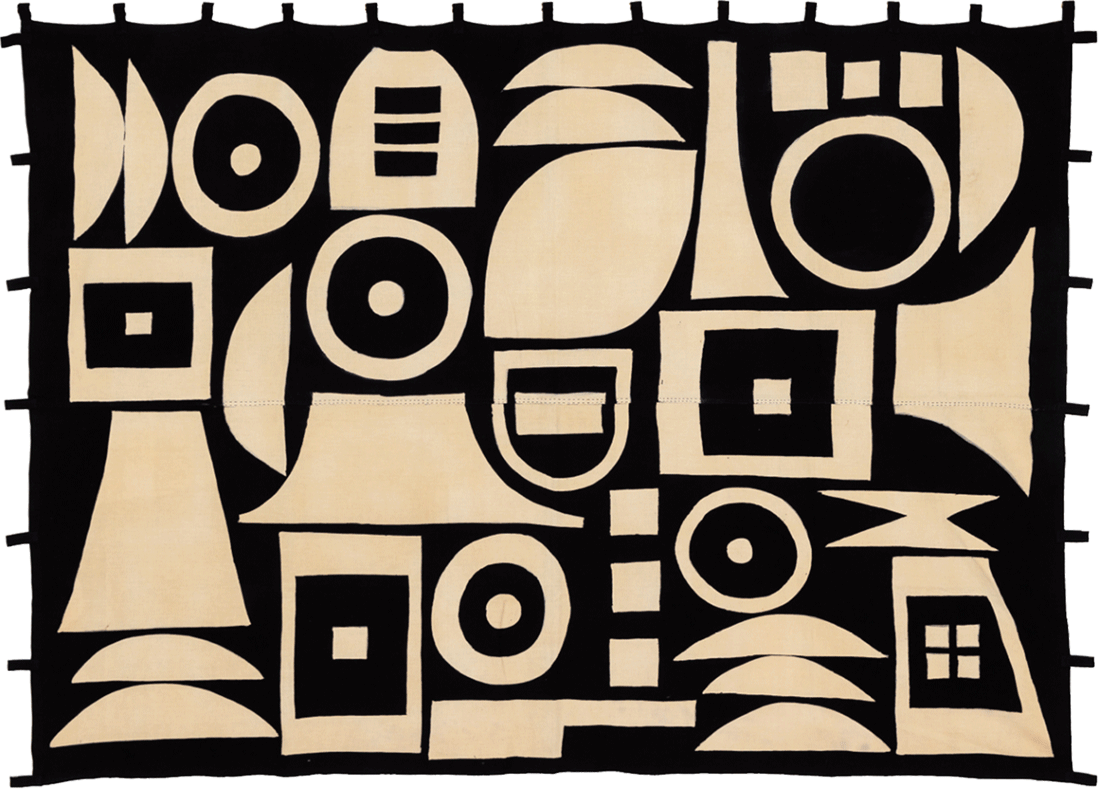
Samiro Yunoki, Curtain, 1961, Sakamoto Zenzo Museum of Art
“Curtain” (1961) is one of Samiro’s grandest textile works, exuding a clear abstract composition in black and brown. Textiles with brilliant red backgrounds show scattered birds, multiple hands, human figures, and rolling waves in gracefully repeated sequences as though they come alive outside the cloth.
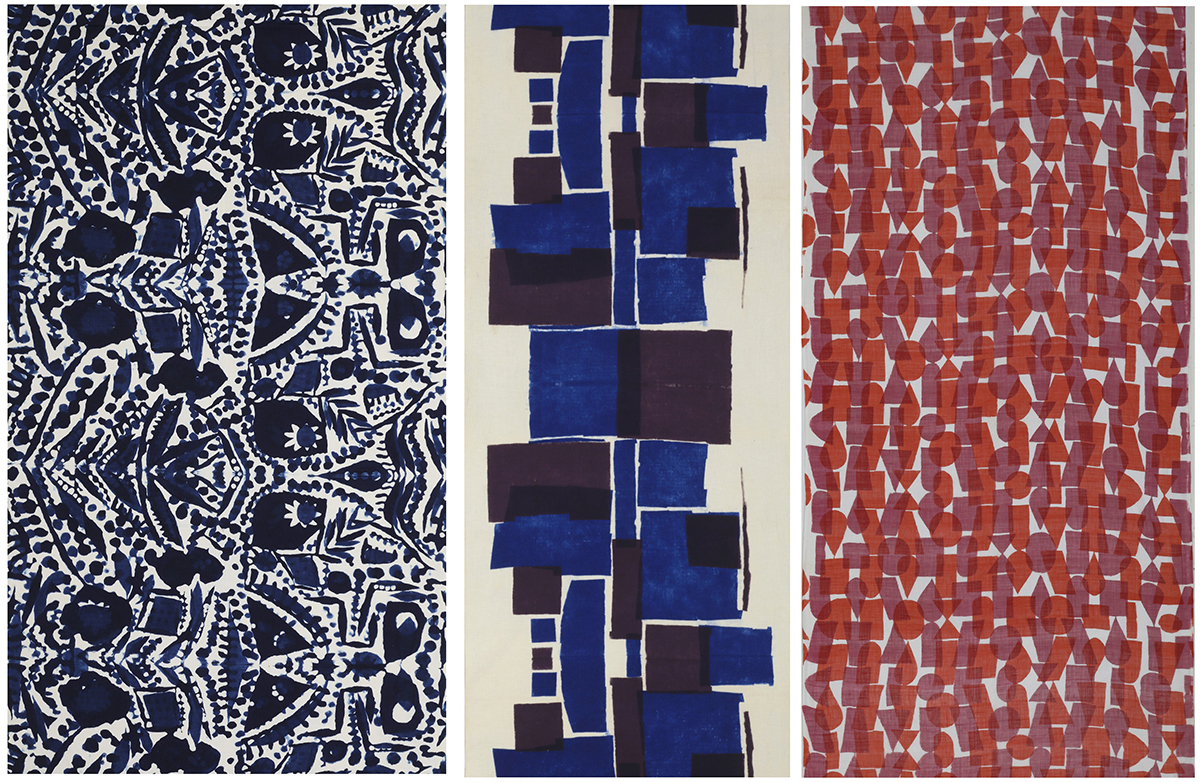
Chūsen dyeing: Samiro Yunoki, Left:, Textile with Romanesque pattern, stencil-dyeing (chūsen), 1959, The Japan Folk Crafts Museum, Photo: Chikako Murabayashi / Center: Textile with geometric pattern, stencil-dyeing (chūsen), 1950s, The Japan Folk Crafts Museum, Photo: Chikako Murabayashi / Right: Textile with geometric pattern, stencil-dyeing (chūsen), 1980s, The Japan Folk Crafts Museum, Photo: Chikako Murabayashi
Samiro adopted a pattern development approach in Chūsen dyeing by applying large motifs on the fabric and folding the cloth while glue is adhered using a stenciled pattern. The dye is then poured onto the folded fabric. The glued areas are left undyed, and the design appears as the glue is removed. His process involved dyeing with thick threads and thin cloths so that the motif comes out almost transparently on cotton or linen — a technique never attempted before in Chūsen dyeing.
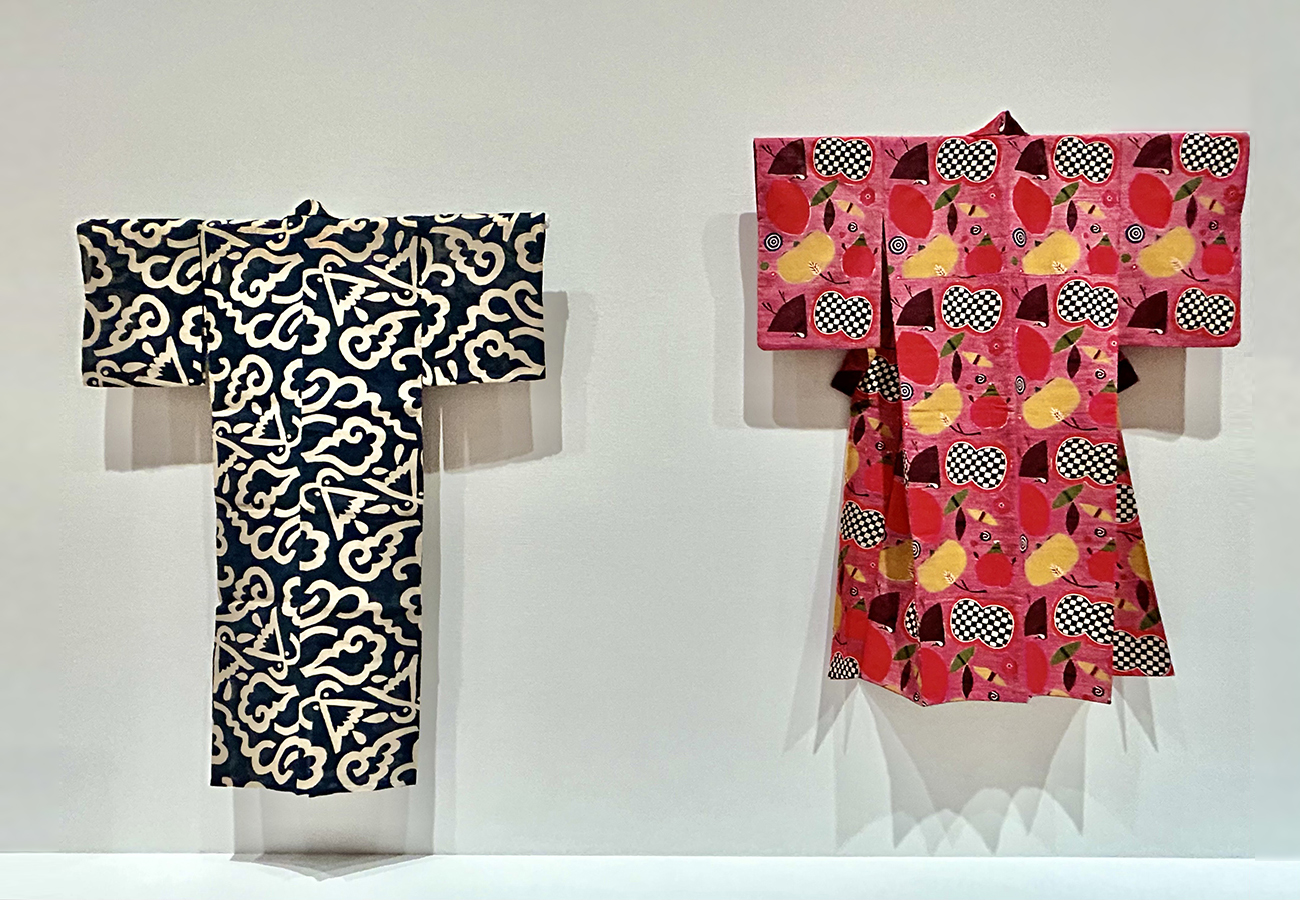
Samiro Yunoki, Left: Kimono with sky pattern, stencil-dyeing (katazome), 1976, Private collection / Right: All Welcome Spring, kimono, stencil-dyeing (katazome), c. 1968, Private collection, Photo: Alma Reyes
A couple of striking kimonos illuminate sky and spring patterns in black and cheerful red, pink, and yellow floral designs, attesting to Samiro’s deep interest in kimono production. He has exhibited his designs at the “New Kimono Exhibition” upon invitation from Moegi-Kai, a progressive Japanese group of young textile dyers and craftsmen active in the mid-20th century.
Read more ...