


CHRISTIAN MONTENEGRO
PEOPLEText: Gisella Lifchitz
Christian Montenegro is a systematic guy. He’s so organized in his life as he is in his work. He studies everything, each detail and each fragment of our encounter as if he was planning a new illustration. His illustrations, as he tells me, are never spontaneous.
“I always work based on some text”, says Montenegro. “I can’t improvise. For me, there’s no such pleasure as drawing for the sake of it. What I like is solving a situation. I find that exciting”.
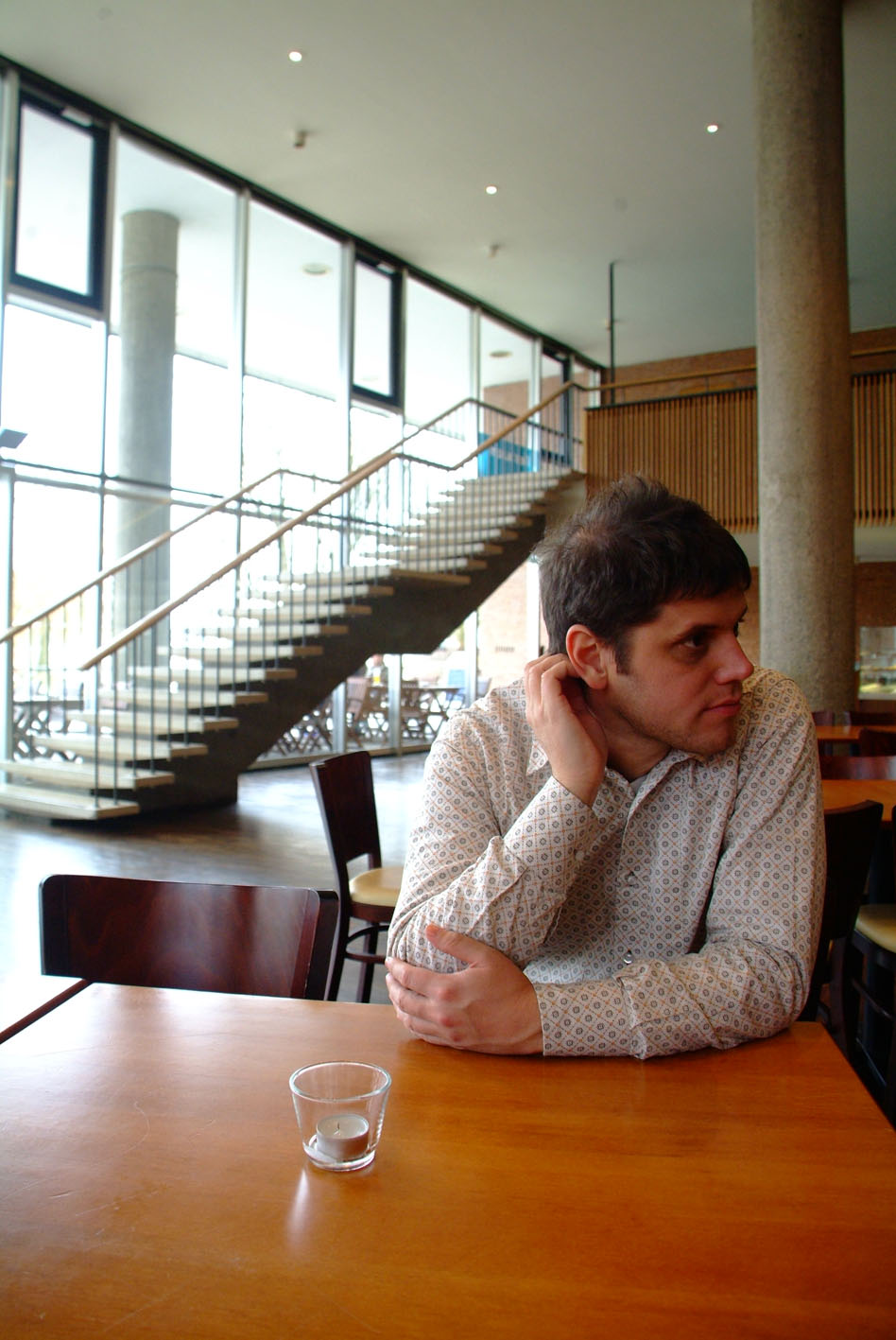
His mind is a compound of theories, a physical micro world where each particle interacts with a purpose.
Christian began drawing when he was a kid, and at the time what he loved most were comics. He studied with Alberto Breccia, one of the most important illustrators in Argentina. “Although we have a large tradition in comics,” Christian tells me, “there wasn’t such a big public for it, so I decided to do something else”.
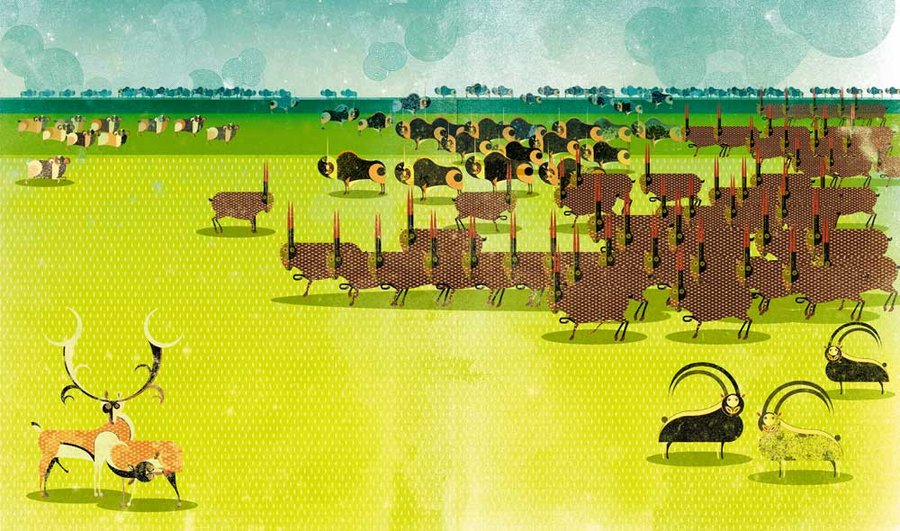
“Who I really admire is Oski. He works on large investigations and edition of the texts, which I find very interesting. Another great inspiration for me is Saul Steimberg, who collaborated with The New Yorker Magazine for many years. He’s a guy that thinks while illustrating. I also love vintage aesthetics from the fifties and German expressionism: their work on textures and crystallization and chromatics.
Please tell me about the evolution of your career.
I could say that everything changed when I entered college to study Graphic Design. Until that moment my style was more intuitive and energetic, and the design discipline introduced an analytic and theoretical side to it.
In 2003 my career changed completely because Die Gestalten Publishers edited my book called “The Creation“. They found me through the web, and found my work extremely original; I was very surprised and happy at the same time.


What exactly were you doing at the time?
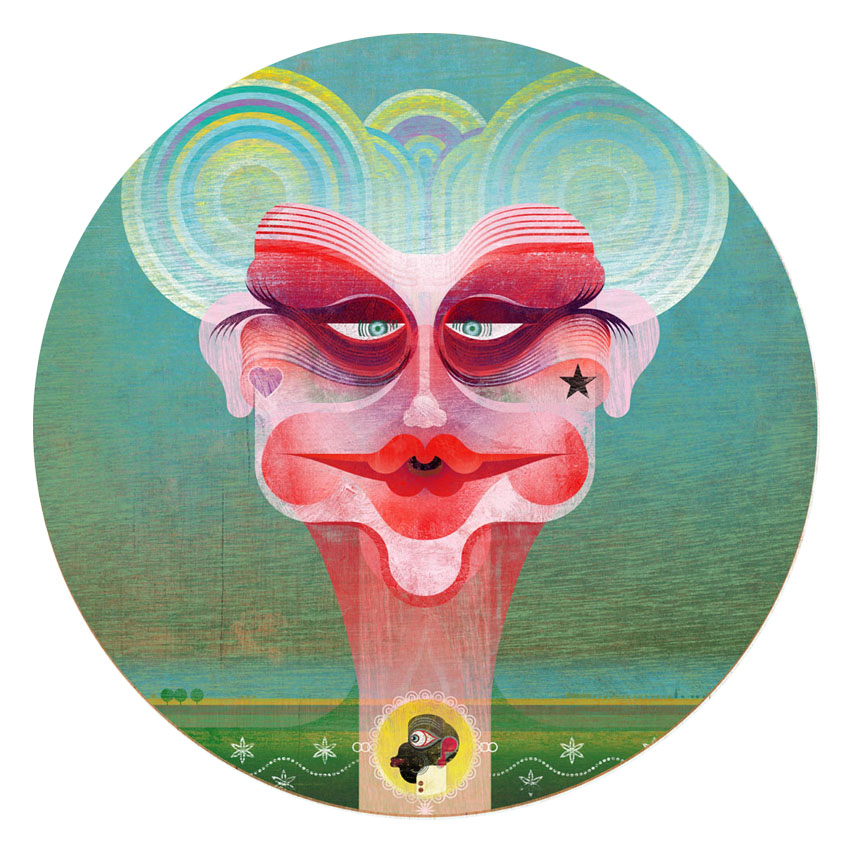
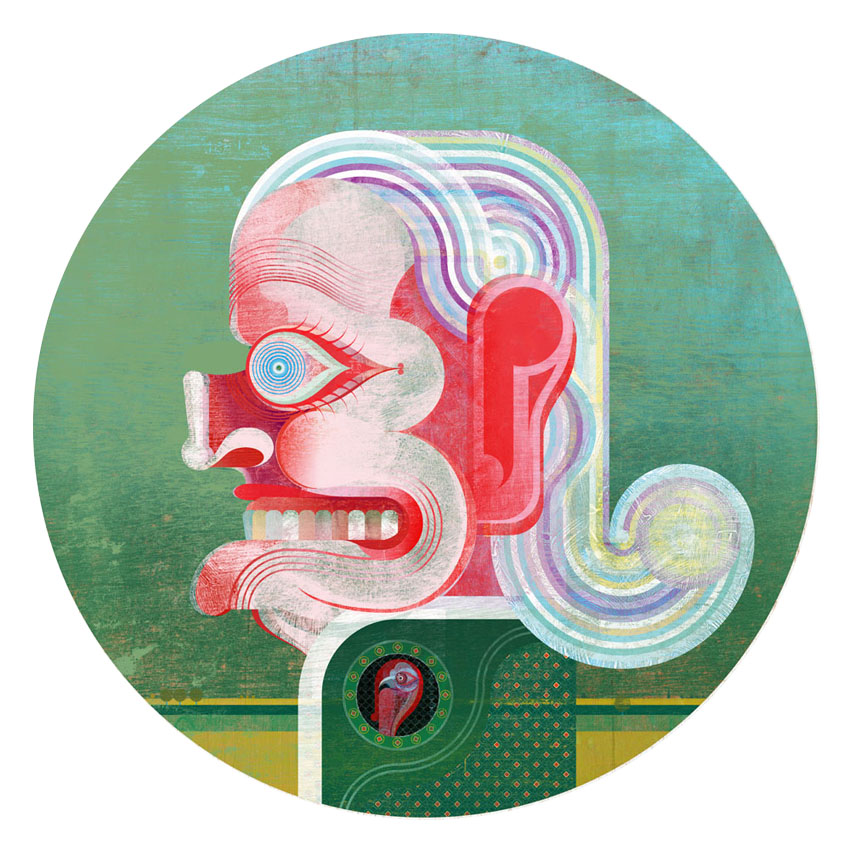
When I started working with the computer, I had a Bauhaus catalogue and was fascinated with a Herbert Bayer drawing of a cigarette stand. I wanted to draw like that, so I started to investigate and I took this system, which has a limited number of pieces, but at the same time has a rich rule structure to combine those pieces. To me, excellence in illustration is not the ability you have, but how intelligent you are to use the resources you already have.
Read more ...
 1 2
1 2