

SPENCER TUNICK
PEOPLEText: Victor Moreno
For over three decades, New York-based photographer Spencer Tunick (b. 1967) has redefined the boundaries of public space, vulnerability, and the human condition. Renowned for his striking, large-scale installations of collective nudity, Tunick doesn’t just take photographs, he orchestrates human geography, transforming vast crowds into breathtaking, elemental landscapes – an experience he describes as “being a pebble on a beach of a million pebbles.” This coming July 26, 2026, his vision takes on a vibrant new challenge at the Culture & Business Pride Festival in Las Palmas de Gran Canaria and Maspalomas, Gran Spectrum, where hundreds of participants will be blanketed in rich body paint inspired by the LGBTQ+ flag. He is inspired by the early performances of Yayoi Kusama, the feminist art of Carolee Schneemann, or the abstract work of Ellsworth Kelly. We sit down with Tunick to discuss the themes of body as an abstraction, inclusion, the psychology behind being part of mass public nudity, the alchemy of turning thousands of strangers into a single, unified artwork, his nostalgia for the raw streets of Manhattan, a Fujifilm 800 ASA enthusiast and his dream of one day bringing his art to the hot springs and pristine landscapes under Mount Fuji in Japan.
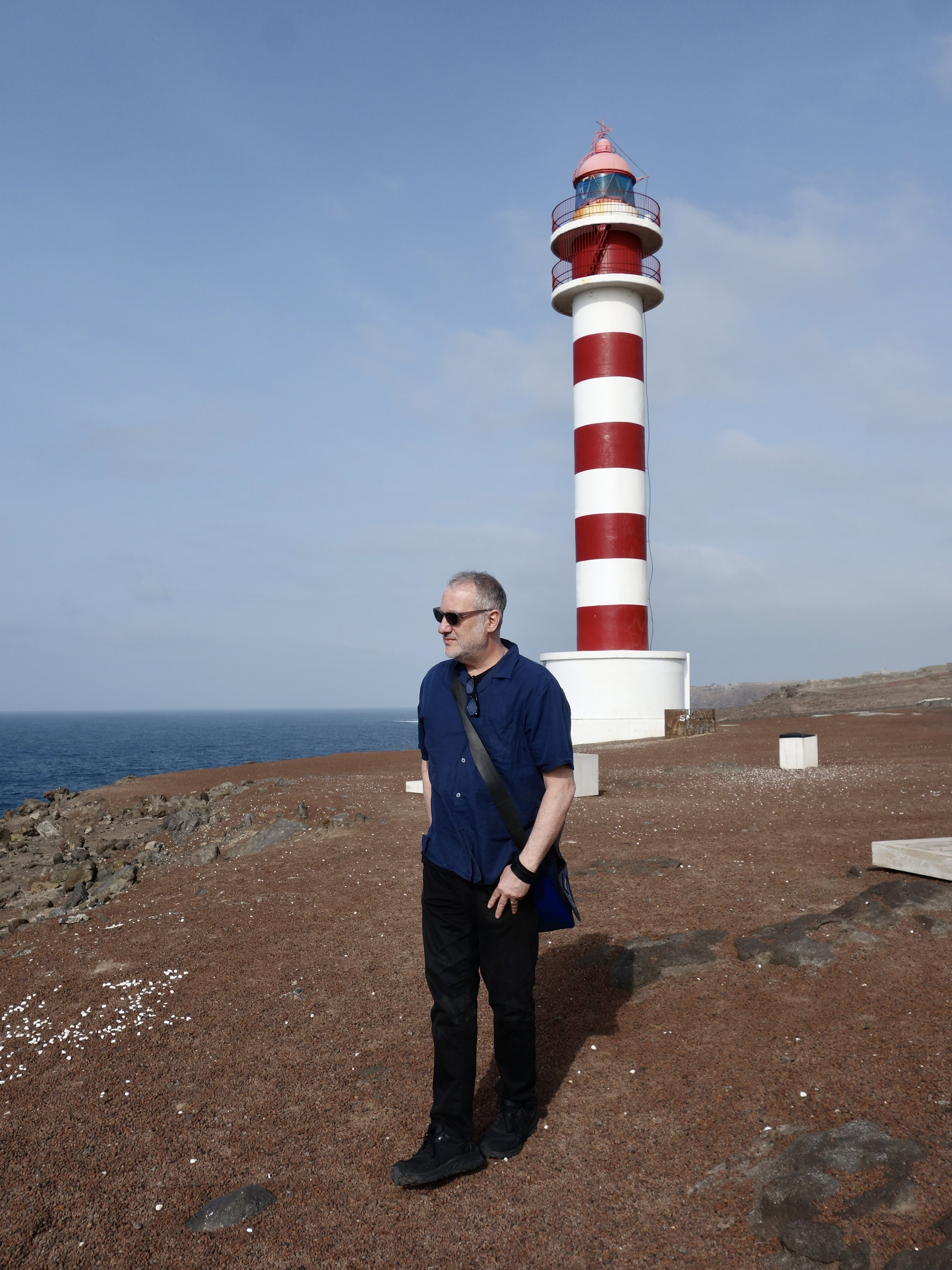
Spencer Tunick, Faro de Gáldar Gran Canaria, Islas Canarias 2026
Our society is layered with prejudices and insecurities, shaping how we live, how we communicate, how we look, what we pretend to be. Your work strips all of that away.
It’s an explosion of life, in a very positive way. It recalibrates your thinking about what the body can be and how it interacts with its surroundings. The body creates a substance and an abstraction at the same time and when you begin thinking of the nude body as abstraction, it opens a new dialogue around acceptance and norms. I’ve always seen my work as this abstraction moving into a city, taking it over, folding into it like a warm blanket, one about love, change, and humanity.
Nudity in public can make people feel ashamed or self-conscious and yet thousands of volunteers have participated in your work. Why do you think people embrace it?
Once you participate, your mind changes. I wish everyone could do it though then I wouldn’t be able to make my work, there’d be too many people (laughs). I think the photographs function as art in a way that connects with people, not only within the art world but outside it too. That common, visceral connection creates a space for change, and for a deeper acceptance of artistic freedom.
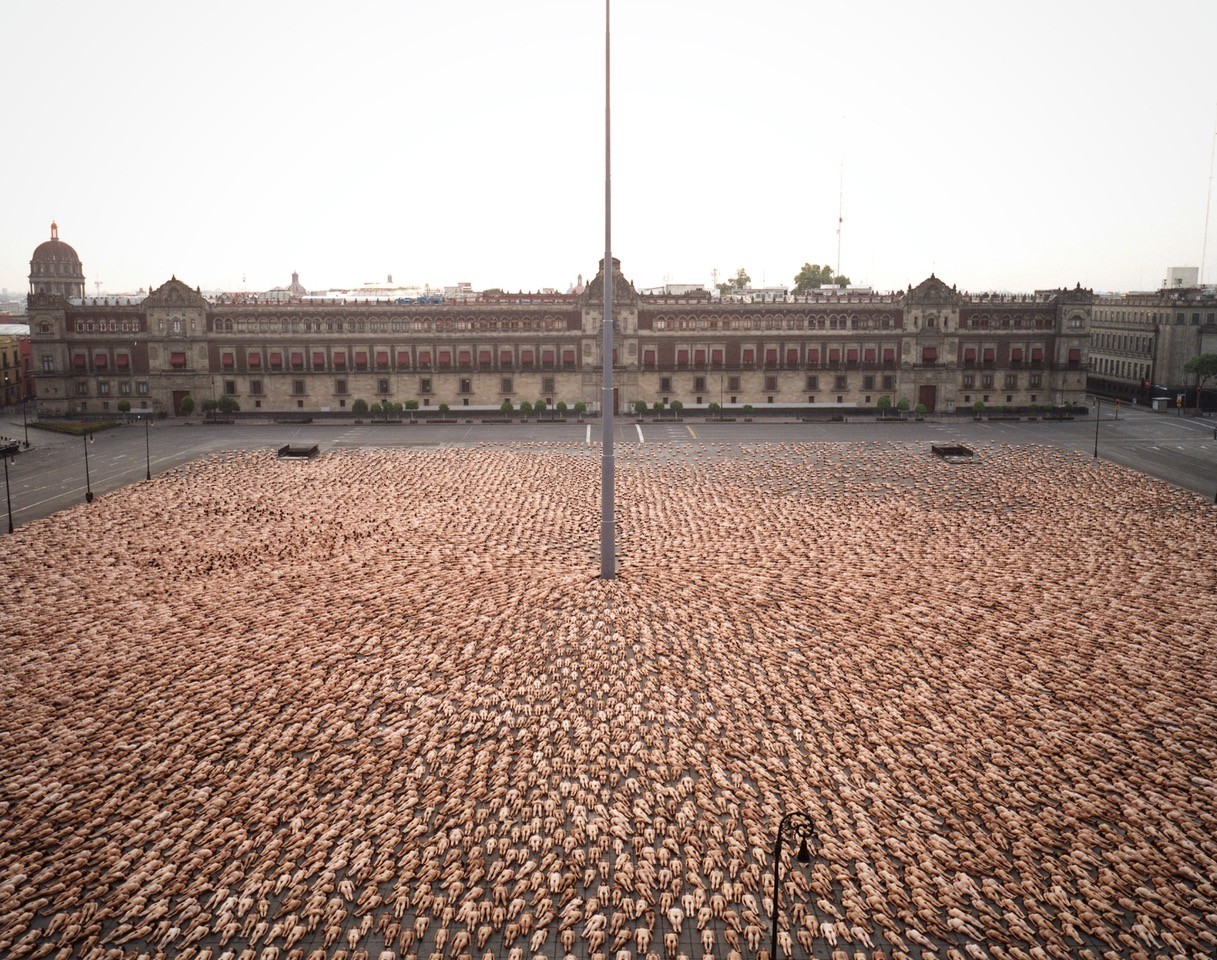
Spencer Tunick, Mexico City 4 (Zócalo, MUCA/UNAM) 2007, Pigment print, 149.86 x 187.96 cm, Edition of 3
What is the largest number of participants you have ever gathered, and where?
Over 18,000 people in Mexico City. Mexico is a very visual society, one that embraces art from birth to death, with altars, celebrations, and even artists on its currency. Not just politicians and scientists, but artists. Countries with that kind of deep visual culture tend to respond to my work with extraordinary numbers.
Do you think certain cultures like Japan, for instance, would be receptive to work like yours?
Absolutely. When you have a country that is extraordinarily innovative visually and yet lives with a certain repression, my work tends to explode in the most positive way, the numbers are enormous. If I worked in South Korea or Japan, it would be huge. Russia, Ukraine, huge. The challenge is always the governments, which can be very restrictive. Though perhaps less so Ukraine, going forward.
You started with one person, sometimes a handful. Walk us through that transition to mass installations.
Well, the tactile act of photographing one person one-on-one is very rewarding because you get to talk to the person and have a personal relationship. But somehow, even when I’m working with a thousand people, I feel like I’m engaging with each of them individually. I feel for everyone’s experience, I go into the crowd. Afterwards I try to talk to everyone. I push people into position, but I’m not a dictator, if someone doesn’t want to stay, we help them out. If someone is blind, they can come with a friend and still participate. It’s really about connection.
Read more ...