


ROPPONGI CROSSING 2025: WHAT PASSES IS TIME. WE ARE ETERNAL.
HAPPENINGText: Alma Reyes
The second perspective, “Sensing Time,” presents the effects of social conditions and overpowering media on our understanding of time. A dark room highlights an interactive installation presenting “ephemeral technology,” which combines fog, plasma, and bubbles like mist-filled “blossoms” that disappear on contact with the skin. In “The Moon Underwater” (2025), Azusa Murakami and Alexander Groves of A.A.Murakami transform natural phenomena into a fresh experience with the aid of an AI-operating system. Bubbles drop from the treelike sculpture, bounce on the water, roll, and burst. The scene captures a sensitive moment of gracefulness evaporating in time.
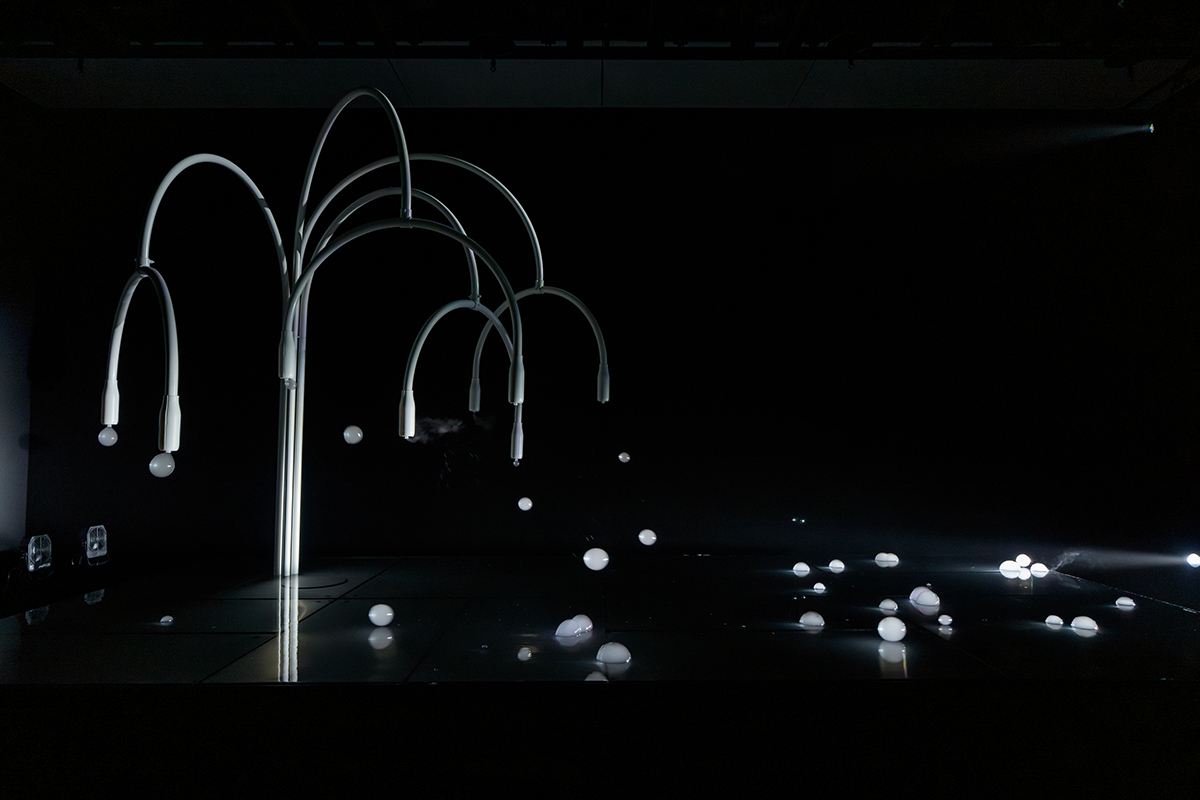
A.A.Murakami, The Moon Underwater, 2025, Production Support: Anthropic, Installation view: Roppongi Crossing 2025: What Passes Is Time. We Are Eternal., Mori Art Museum, Tokyo, 2025-2026, Photo: Takehisa Naoki
In the room that opens to the magnificent panorama of Tokyo, Rejiro Wada, who is based in Berlin, exhibits “MITTAG” (2025), two glass panes fixed in a brass frame with brandy inside them. The base support is made of bronze cast from the dried wood of a grapevine aged over sixty years. The fusion of liquid, brass, bronze, wood, and the fermentation and distillation process of the brandy exudes both eternity and transience. The weight of the brandy allows the glass to function like a lens peering through the cityscape. The skyline is distorted by the light’s refraction and brilliantly glows in shades of brown.
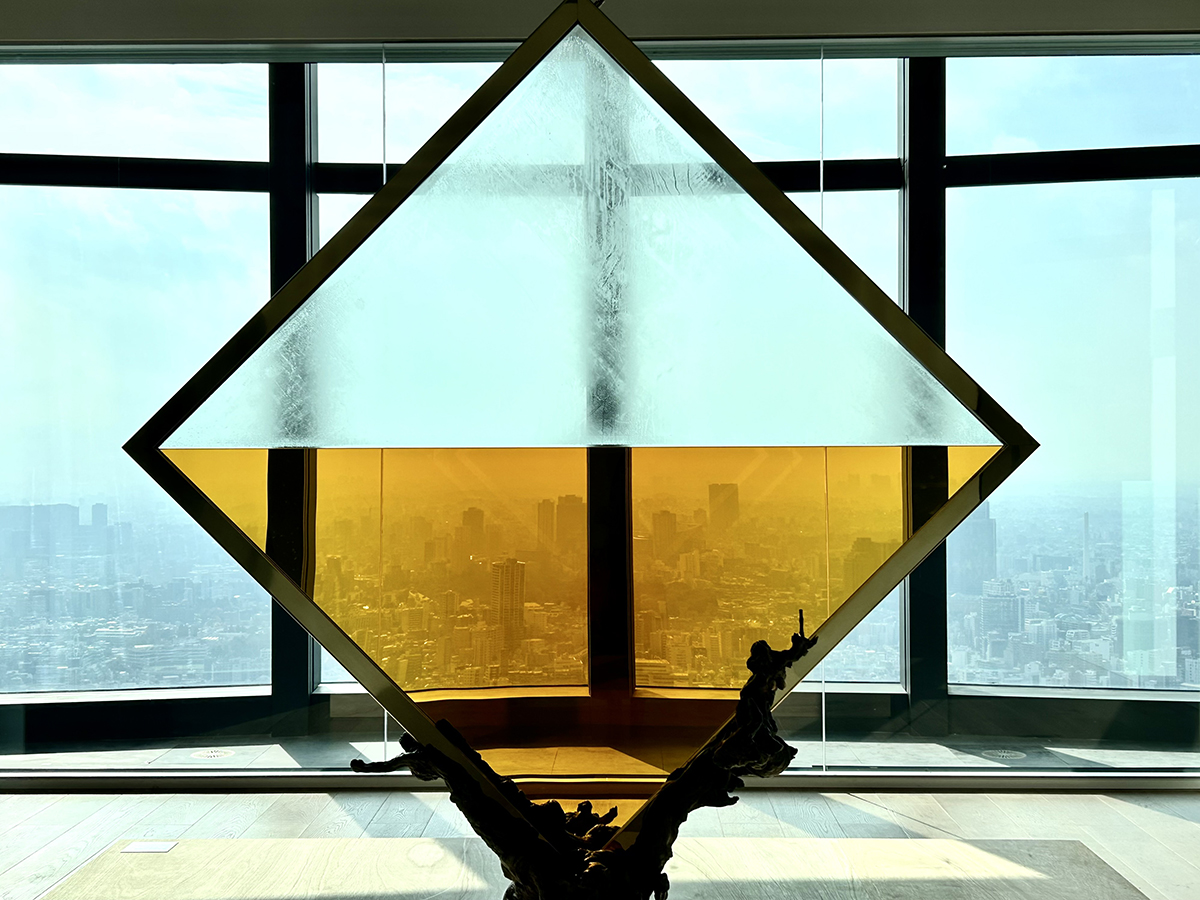
Reijiro Wada, MITTAG, 2025, Installation view: Roppongi Crossing 2025: What Passes Is Time. We Are Eternal., Mori Art Museum, Tokyo, 2025-2026, Photo: Alma Reyes
A giant replica of the Nakajima Ki-43 “Hayabusa” fighter plane is suspended from the ceiling, demonstrating the third perspective, “Time Together.” Based in Indonesia, Jun Kitazawa illustrates colonial history as exemplified by the plane that was used by the Japanese Imperial Army during its invasion of Indonesia in 1942.
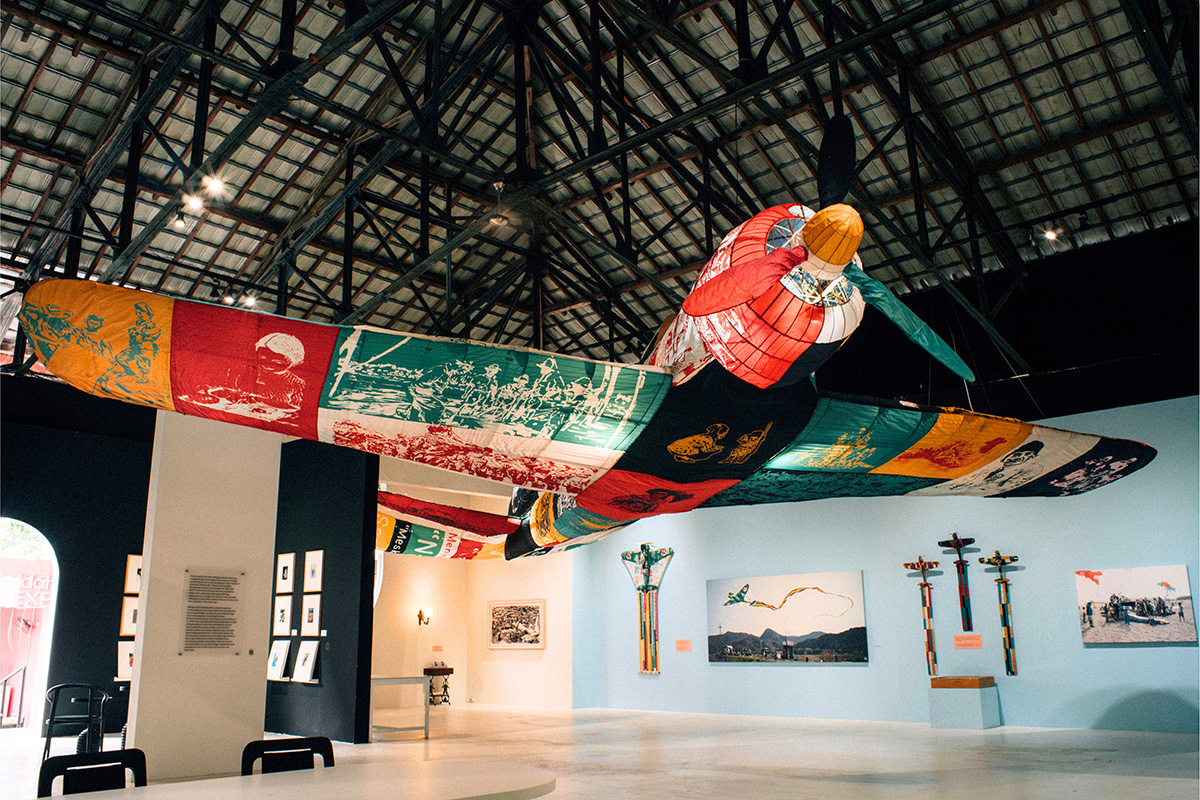
Jun Kitazawa, Fragile Gift: The Kite of Hayabusa, 2024, Installation view: ARTJOG 2024, Jogja National Museum, Yogyakarta, Indonesia, Photo: Aditya Putra Nurfaizi
The aircraft was reutilized by the Indonesian military against the Dutch rule. “Fragile Gift: The Kite of Hayabusa” (2024) was designed as a kite made from bamboo and hand-drawn fabric. Kitazawa’s design practice, which he calls “Community-Specific,” connects him with diverse societies in building projects that bridge the past, present, and the future.
This perspective delineates the artists’ direct participation in dialogues and relationships with people, places, and histories in nurturing collectively shared communities and local cultures.
Read more ...