A creator who pursues simple and universal expressions.
Making a buzz for generating more than 1.5 million downloads on YouTube, the music clip "Hibi no Neiro" was selected for DOTMOV FESTIVAL 2009 and amuses many viewers at festival sites nationwide since the festival launched in November. SHIFT for this month has interviewed Masashi Kawamura, one of the members who created Hibi no Neiro. With his SHIFT cover work, we deliver a wide range of his ideas and thoughts from his past hit works to his future vision.
Please introduce yourself.
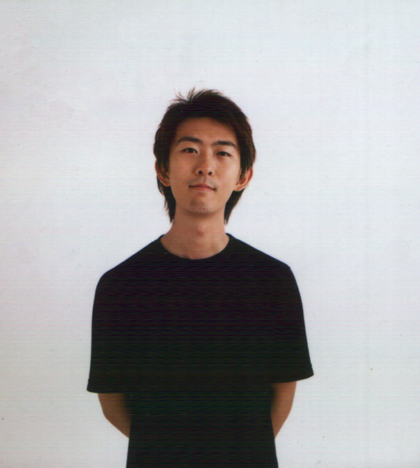
Hello. I am Masashi Kawamura. While I work for a creative agency BBH in New York as a senior art director, I work on a variety of my personal works like book designs and directing films.
You have been working on a wide range of projects including film works such as TV spots and music videos, advertisements, print materials like CD covers, product designs and interactive designs like websites. What did you originally start working on? Please tell us the background to your present career including your work experiences.
I first started to study programming in university. In my second year, I started to work at Masahiko Sato laboratory in Keio University and saw the fun of making things for the very first time. It's not too much to say that I have learned most of my ideas and thoughts for making things through experiences at the laboratory.
After graduating, I started to work as a TV commercial planner at an advertising agency Hakuhodo. The TV commercial planner at Japanese advertising agencies generally works only within a media the TV spot, and I started to feel uncomfortable with it. Basically I have been thinking it is right to have an idea first and then explore it to an expression with the best matched media such as web, TV, print, event and so on. So I started to feel that it was not enough to make only TV spots.
At that time I heard BBH Tokyo was going to be launched, and decided to move forward to learn how to work with foreign creative directors working at BBH Tokyo. After that, I worked at BBK London, but I felt "I wanted to set myself in a position where I could work on creative things with few people", as BBH London was a big firm and wasn't light-footed. And then I visited the creative agency 180 in Amsterdam and worked there for a year. At the beginning of this year, I moved to BBH New York.
One of your works for TV spots is for the Korean liquor JINRO, which attracted many people with its unique music and film. What was your role on the project? Please share with us the making process and any interesting stories?
JINRO is a TV spot that was the first time my plan was accepted after spending 1 year at Hakuhodo. First I did a presentation of choreography with storyboards to the team, but that was obviously not enough to get across my plan. I felt frustrated, so at night I called up my friends and videotaped their dances, and the next day I did another presentation again. This time, they liked my plan which was "somehow silly and interesting". So we decided to present it to the client. From this experience, I learned how important it is to share my vision with others to make up things with many people.
After my plan was accepted, I have worked on making adjustments on choreography with director Geoff McFetridge and refining small things on the film sequence. As Geoff was basically good at graphical expressions, he was also good at making a nice atmosphere and finally created a great piece. But I remember after finishing the film we all were a bit worried if it was ok that we created something terribly weird for a TV spot. But recently I realized when you make something more radical that creators cannot even evaluate 100%, it will be something newer and better.
About a book "Rainbow In Your Hand". It seemed you made a good use of YouTube for its promotion. How did you start to make the book and how did you distribute it? Also, did you have an image from the beginning that you might have success using YouTube?
Originally I like flipbooks. And the book was first started because I have been looking for something new to do with flipbooks. One day, as I was flipping a flipbook, I realized there was an afterimage left between pages, aside from sequences of frames that create an animation. And I thought nobody utilized this idea to create an expression before. When I was thinking to do something with it, I wondered wouldn't it be nice to make a rainbow since the afterimage was arch shaped? So, I tried to make a prototype using my printer and it turned out as well as I had imagined. And then, thinking on what's the best way to make this expression exist in the world, I thought it's better to showcase it at bookstores as a product than a work of art. And I went to my friend's print company and paid for 300 copies of the book out of my own pocket, and went to sell the book to bookstores. One of the bookstores, Mr. Eguchi of Utrecht liked the book very much and they accepted both print and distribution of the book.
As I got good pictures and film for the marketing material, I uploaded it on YouTube and it became widely known more than I expected and was featured on famous design blogs abroad. As a result, the book was distributed at colette. I think the book became popular with the help of the language-independent and universal idea of the book. Honestly I imagined that many people in the world would watch it if I put it on YouTube, but I didn't expect this much. Through this book experience, now I realized the strength of viral for the first time, which I had just known in my head before. Even if something is small, people will watch it if it has a good idea. I got such confidence from that time.
You are involved in producing a children's TV program for NHK "Pitagora Switch". What is your role on the TV program?
My main role was to create contents for the TV program "Pitagora Souchi" and "Algorithm Exercise". I created Pitagora Sochi, a new toy using household objects as I thought it would be fun if kids can do the same thing at home. Also we have planned Pitagora Switch for several multi programs, it was just a nice expression to make one program like the other, like MTV's Station ID. At the time when I was involved in the creation, staff and I bought along various products like books and dishes and stayed for 2 weeks in NHK to improvise making the program without any design plans. It was tough sometimes we needed more than 70 takes for a complex device.
As for Algorithm Exercise, Prof. Masahiko Sato and I created its choreography together. I remember we tried various choreographies in the professor's room. We aimed to create a fun choreography which could be done with various people like a child and parent and between friends. I am very happy as people tell me "I dance like kids or parents teach me the choreography!” One day I saw a YouTube film that people in a jail in Philippines dancing Algorithm Exercise, which I was very impressed to see.
Please tell us about "Hibi no Neiro" a selected work for DOTMOV 2009. It is the music clip of a track Hibi no Neiro by SOUR. Please tell us about the piece: how it was made, what was the idea and who made it.
First of all, a member of SOUR hoshijima is a friend of mine from high school. Since then, he has been making music and I was drawing. Even though our focus was different, we shared common taste and we were always saying that it would be nice to do something together someday. And I made a music video "Hangetsu" (Half Moon) for the first time in accordance with SOUR's debut. After that, I made a video for the track "Omokage no Saki" (Beyond Your Memory). So this was my 3rd time making videos for SOUR.
Hibi no Neiro was made by 4 members including me, Hal Kirkland who is in the team with me at BBH (we made the previous work "Omokage no Saki" together) and New York-based video artists Magico Nakamura & Masayoshi Nakamura. It was the fruit of our guts (laughs).
As I started to think about this project, I fist came up with a concept with images of "various characteristics" and "connection" from its lyric. And we had a difficult situation for shooting as SOUR was based in Japan and our production team was based in New York, also we had a small budget so we couldn't use good equipment. But we switched the idea to take a good advantage of such constraint for the music video, and that took us to the idea to make a big picture connecting various videos which were shot with webcams by fans. As we use Skype to contact with people in Japan, we were like "people these days are connected in such form".
It took about 3 months for the production period from planning to its completion. It took more time than I expected because all 4 of us had to work on other works during the daytime and we needed to work with a quite a lot of people for teaching an acting performance and shooting. For the first month after the concept was fixed, we printed out various sizes of grid and drew as many ideas as we could imagine. And we picked good ones among the ideas and made them animated them to weigh the timing of the track. Based on it, we then shot ourselves to test details of choreography, post produced it, and made a prototype of the video. And then we sent out the prototype to the participating fans and asked them to dance in reference to the prototype video. People might think we adjusted the video, but we tried to stick with not using gimmicks for editing like time stretch. I believe all element including such focus, joy to connect with unknown people and love toward the band from fans created the hand-made quality and finish of the video.
I can feel sense of humor from all your works which you have explored in various fields. To express humor is one of your themes?
Actually I think I am not good at "humor" and "laugh" (laughs). My theme I clearly pursue is simple and universal expression. I think the best expression would be an expression that is enjoyable by anybody from kids to adults in any country. In addition to it, as I recently think back on my past works, I think I like an expression that I can feel the warm or relaxing part of people. You might be feeling the relaxing part as a kind of humor.
You have been working with various forms of expression including film, product design, book design, web design, interactive design and so on, Which way of expression do you think you enjoy or feel most comfortable with? Please tell us what activities you like to explore in the future as well.
For me, film is the most experienced expression, but I believe I have the confidence to think that the best ideas are not about expression using which media. That might be the reason why there are completely different expressions created naturally every time I make something. In the future, I would like to challenge myself to express with less-experienced media like product designs, applications and installations.
Please introduce the SHIFT cover which you made for this time.
The concept is as it is, "SHIFT". As it's a cover design, I wanted to use the logo SHIFT. I started to think from the idea, I made a cover thinking it would be cute if the SHIFT logo shifted to various things to express SHIFT. I was thinking to make it a bit longer, but I was running out of time.
Please tell us your recent activities including latest works and ongoing projects.
At BBH, I am working on next year's global campaign for AXE. For my personal work, I recently made a music video for Snoop Dogg with the director Paul Hunter.
As for ongoing projects, I have a few. One of them is a project collaborating with Spicebox and Tokyo Peninsula to make a new application/service using ADOBE AIR. I hope we can present it within this year. I am also involved in planning a project by Yugo Nakamura. Projects for jewelry and installation are super-slowly on going (laughs). I hope to present them in 2010.
I want to keep working on films and products, but I want to experiment with unfamiliar media to do my expression as a challenge to myself.
What is an important thing to form an idea? Also, please leave a message to those in younger generations who like to work in various creative fields like you.
I think it's important to make something by yourself anyway, to not be afraid of failure, just to move your hands anyway and to use your brain to make realize it. There are a number of people who can come up with ideas, but less people who work on the idea to give it shape by trial and error. I think the big point is if you can do it or not. I don't have a firm equation to shape an idea either. I have been through a series of problems of how I should solve every time. But I believe it is important to go through the problem and work on it hard with an enthusiasm to even create a new way for the expression.
Also, to work abroad is not such a difficult thing. I think the creative level in Japan is comparable to that abroad. Of course it's better to be able to communicate in English, but our duty is like a battle of ideas. I think there's no problem if you can communicate with the other even by drawings to convey your good idea. Giving up from challenging yourself would become an obstacle the most, so I want more young people to challenge things anyway. And let's create something fun together.
Text: Mariko Takei